Day 1…..
When last did you drive a WOW road??.
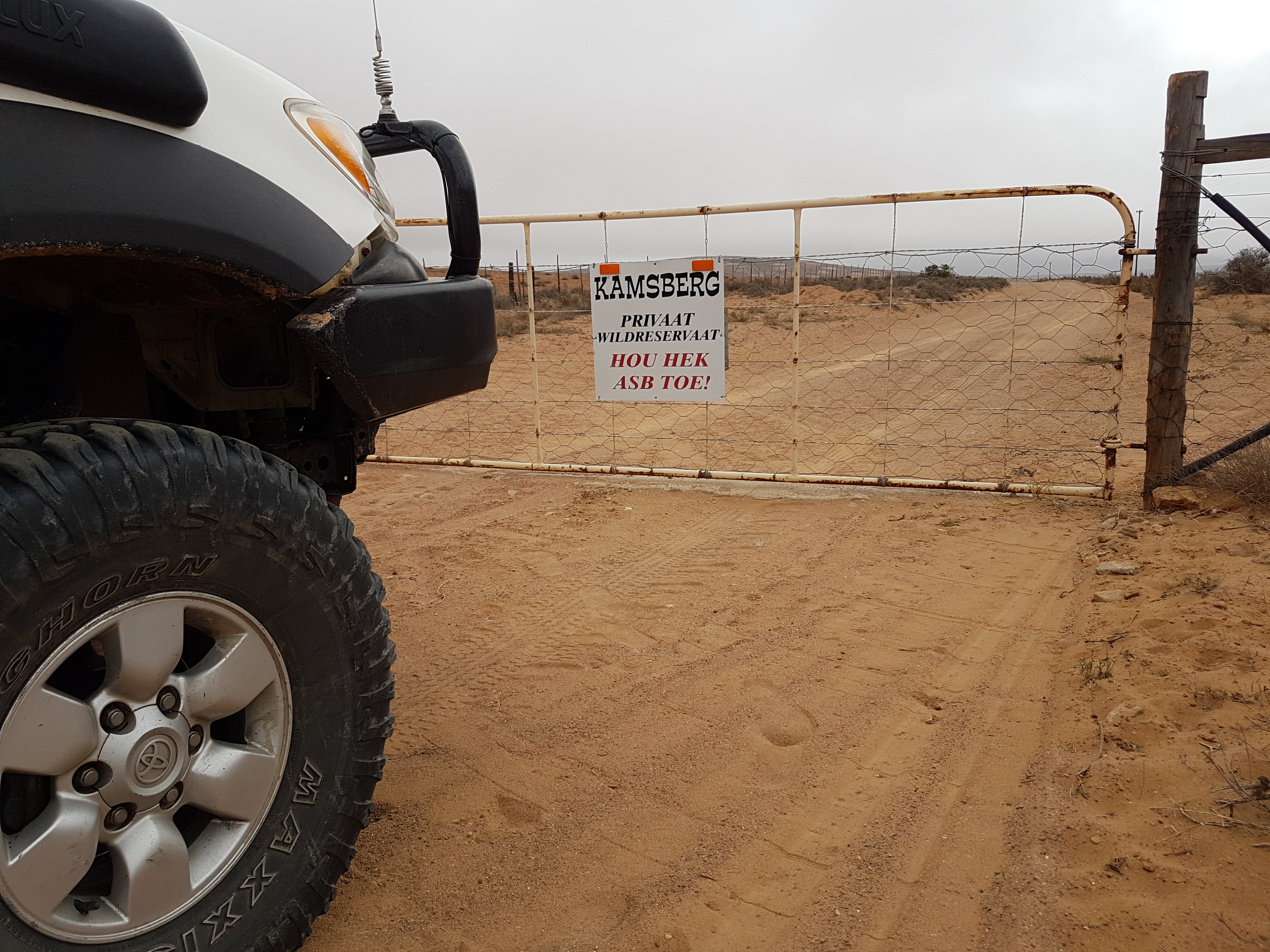
I don’t think we comprehend the beauty of the country we live in. I was left speechless today when I decided to take the road less traveled. Not only did I discover a small Karoo town named Merweville, I also drove a pass I have never heard of – neither read about. Rammelkop pass is the best-kept secret the Karoo has. This piece of road with its old school Karoo charm takes you by surprise when you realize that the true beauty of our country lies unexplored. This is one of those roads you wish not to end. It still has farm gates with the signs – “please close gate”. This brought back many a childhood memory. Forget about sea holidays, explore South Africa and find the hidden gems. Camping in Sutherland tonight. Got to earn the badge for camping in the coldest place in SA in the middle of winter.


Day 2…..
Mountain passes, farm roads and dry riverbeds…..
Today made me realize that you can actually measure the beauty of a road by the time it takes you to complete. It took me 8 hours to do 370 km today. I left Sutherland just after 9 and took the back road via Ouberg and Gannaga to Middelpos and then van Rheenen pass to Van Rhynsdorp.

The Ouberg pass takes you by surprise and leaves you in awe as it appears out of nothing as you go over a small height. The sheer vastness of the Tamkwa Karoo that appears in front of you leaves you breathless. This is a good place to go look what lies in your near future because the vastness is indescribable. Taking pictures leaves you disappointed because no picture can ever do justice to what you see and experience. The road winds down and every bend begs for more photos.

Down in the Tamkwa, the road winds through old Karoo farms with plenty old and derelict farm stalls. It crosses many dry river beds and signs of the current drought are clearly visible everywhere and it’s a constant reminder of the harshness of this environment. On my way to the next pass (Gannaga), I passed through the Tamkwa Karoo National Park, another well-hidden gem. This park begs for some future exploring. Gannaga pass was just as spectacular as I hoped it to be. Again the same story of the pics not doing justice to what you see and experience. The roads I did today was exceptionally good and well kept. I can’t understand why people don’t do dirt roads more often.
Middlepos was the afternoon stop for something to eat and drink. The hotel is as old school as old school Karoo hotels get. Had a nice chat with locals that confirmed the severity of the drought. After lunch, I made my way to Calvinia, the mecca of lamb chops in SA. Bought some for later…. Last stop tonight is Vanrhynsdorp caravan park with its own unique old dorp charm.
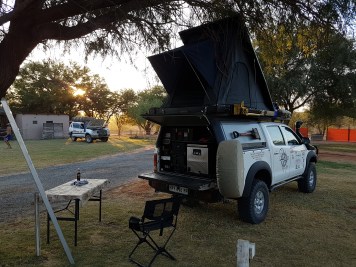
Very nice and clean at R100/person with restaurant and WiFi.

Day 3…..
Sand roads, life lessons and solitude.
Today was a day of firsts for me. First time I set foot in Lutzville and the first time I got properly stuck in the middle of nowhere but let me start from the beginning.
Left Vanrhynsdorp just after 8 and made my way to the Skoorsteentjie padstal where I bought Skuins-koek. How many of you know what it is and who has eaten it. This is to the Boesmanslanders what mielie-pap is to the Vaalies. This used to be trek kos and it will stay fresh and edible for weeks. This brought back many memories to my brief stay in Brandvlei many years ago. This and biltong were the staple food for the Boesmanland folk who used to trek long distances with their livestock many many moons ago.
I made a short stop in Lutzville to have a chat with some locals. They are very friendly and everybody speaks a Boesmanland/Weskus Afrikaans. This is almost a language on its own.
Not far outside Lutzville is an Eskom wind farm. Those big fans that we tell the kids make all the wind for us. Not until you stand next to one of these blades do you realize how humongous they are. Look at the pics and see for yourself. The bakkie looks small in comparison. This is a must see….
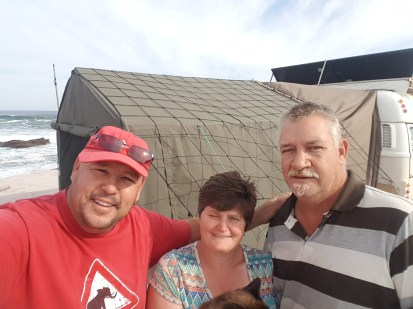
I then made my way to start the recce of the road all along the coast and to see if it’s possible to do this road all the way to Alexanderbaai. On route I stopped at what looked like a very interesting camp setup and I knew that there was a story waiting to be heard. The combi and tent belong to Vincent and Santie and their cat. They tour with this setup and stops wherever they like. They are totally off the grid and they even make their own fresh water from sea water with a kettle and copper pipe. It takes Vincent 8 hours to make 20 liters. They have been camping here for 2 months now. What a privilege to meet them and I walked away a wiser man with some life lessons learned.
I came to a fork in the road and tossed my left or right coin. Right it was and I continued as the sand got more and more loose and deeper. Somewhere inside my head, there was this little voice telling me to stop and deflate the tires but noooooooo rather put peddle to the metal because momentum is more important than traction. NOT!!!! So long story short – 4 and a half hours later I was finally released from my temporary sand prison. This just made me realize the importance of always traveling with another car in remote places.

I was on my merry way again and made my last stop at this site between somewhere and nowhere. The solitude and scenery are breathtakingly beautiful. I sat for almost an hour contemplating the thankfulness and gratitude to experience this freedom. To be able to still find these hidden gems in this country of ours. To be here and not to think or worry about the turmoils our country face and the day to day battles to make ends meet but to just live the moment and be amazed by the scenery around the next bend. After I left Vincent I did not see any other humans or cars – not even tracks. This to me is paradise. I, me and myself with my thoughts. This leaves me in a predicament and I have mixed feelings about places like these. Do I share this with others or do I keep these places secret in the hope that it never becomes just another tourist flooded place? This is one of those places where you can feel your inner being taking a sigh of relief and where you can feel how your humanity is being rejuvenated and restored. I wish I could camp here for 2 months. I will be back sooner than later………….
Day 4…..
Garies, Namakwa park, seals and a dead whale.
What makes this part of South Africa so special and unique? The West Coast and The Karoo has a charm that words can’t describe. I personally think the answer lies in between the natural beauty of the landscape and the warmth of its people. Making a living here in this barren and unforgiving area is hard, but despite that, I sense a life lived with happiness and thankfulness by the people that inhabit this part of South Africa.
The rain came through the night and I could almost feel the earth sigh in relief because the drought here is evident everywhere you go and is the first thing that comes up in conversations with locals. After packing up, I made my way to Garies. A 130 kilometer round trip out of my way to see what this little town looks like. As luck would have it, I reached town just as the church was coming out and the only open shop here on a Sunday is at the petrol station. These people are the salt of the earth and they all have a sincerity about them that we as South Africans has lost along the way. After some lengthy chats, I filled up 177 liters – that gives me roughly 5.5km/l. I am happy with that.
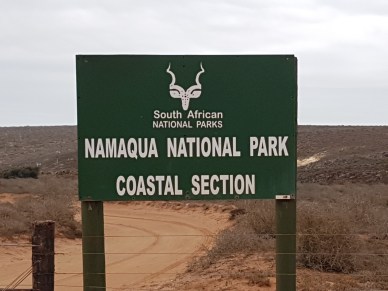
Reached the Namakwa National Park just before 12 to do the paperwork and to proceed the last stretch of off-roading along the coast. This is a very well kept park with the most incredible scenery.
The rugged unspoiled coastline is in sharp contrast with the diamond mined/raped coastline north. Our insatiable greed and need for the precious little shiny stones are taking its toll even in this part of our beautiful country. When will enough be enough for us humans????? This is a question I am battling with as I travel. When will I have a big enough house, when will my bank balance be enough or the car I drive. In the day to day hustle and bustle, to get more and more, we are losing more and more of ourselves. Time after time stopping at what looks more beautiful than the previous stop, I realize that we need places like these. This is our recharge stations. These places have no radio, WiFi, television and or any communications. These places make us think what’s important in life.
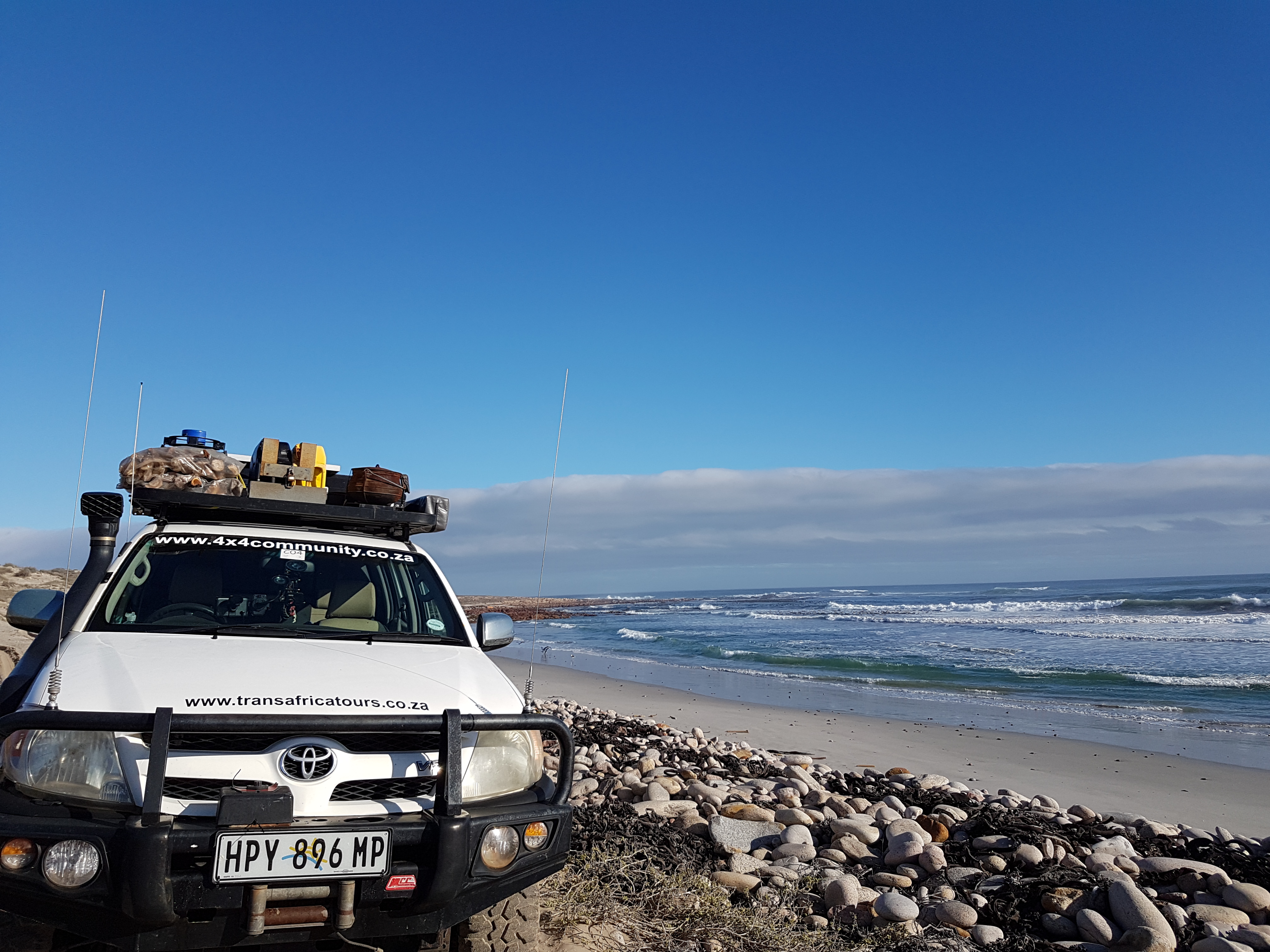
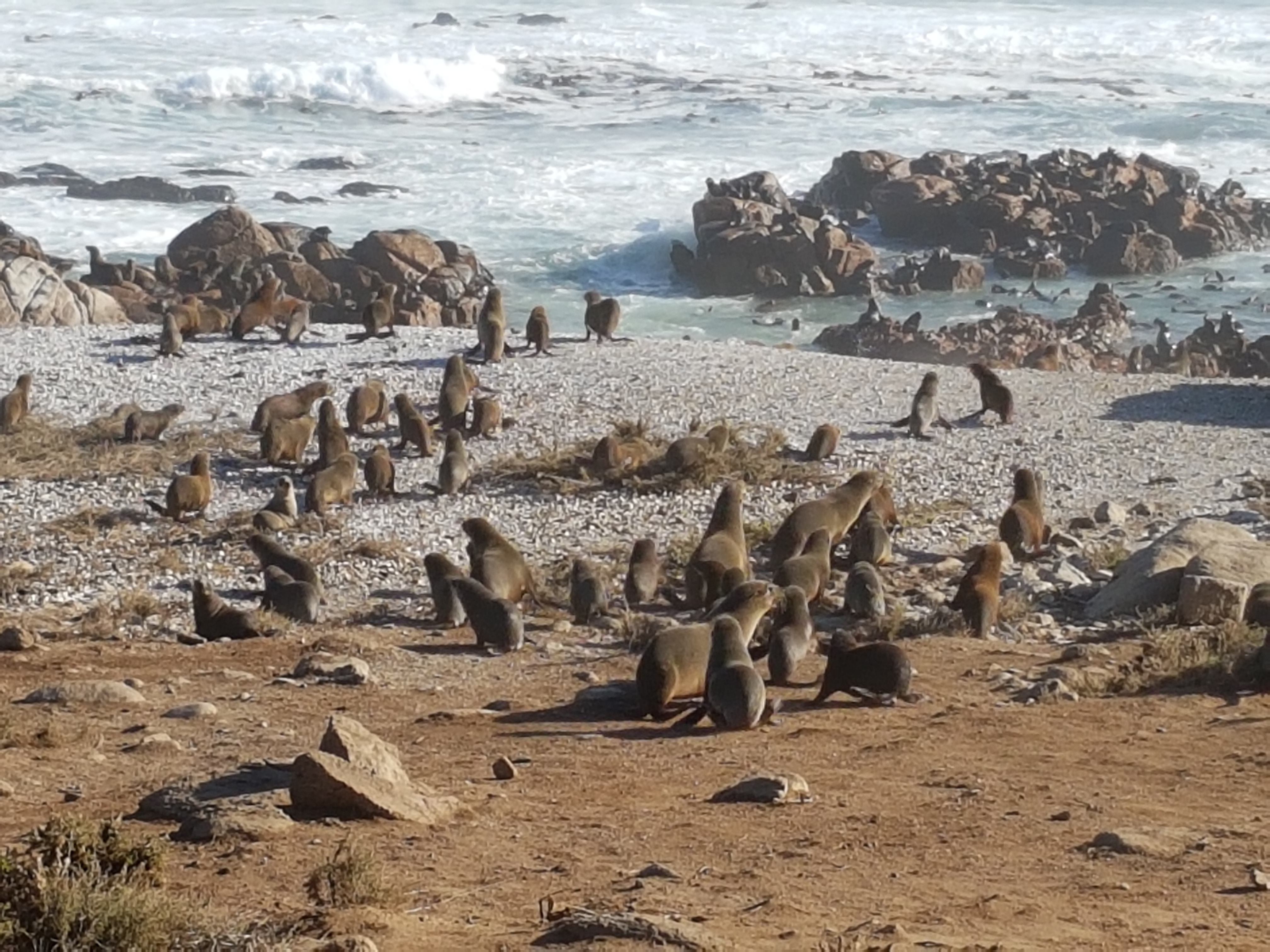
The journey took me past thousands of seals and a dead whale lying on the rocks. I drove through pure white sand dunes and had some fun in the very deep sand without getting stuck this time. Hondeklipbaai is definitely on my list for future exploring. This looks like a very nice town with many stories to be told. Saw some dolphins playing in the bay. All these mine dorpies like Koingnaas, Kleinzee have one thing in common. They remind me of the towns I grew up in.

Reached Port Nolloth around 8 and found my way to Mcdougall’s Bay caravan park. I was extremely hungry and the bully beef and curried vegetables tasted better than any 5-star dinner I ever had. Sometimes the greatest pleasures are found in the simple things in life. We only need to appreciate it for what it is. Nothing less and nothing more……..
Day 5…..
Legends, borders and a day on Mars.
Today saw me taking it slow and meeting some of the locals in Port Nolloth.
What an experience to meet the legendary George Moyses. He is an old school tough but humble ou, SA Navy Diver, Diamond Diver, boat builder, writer, photographer, videographer, actor, producer and storyteller of note, 70 years old but very young in soul. Speaking to him you realize that you are speaking to a legend in his own time. Do yourself a huge favor and look him up in Port Nolloth – you will be much poorer in life experience if you don’t. This is one of the main reasons I travel to places like this.
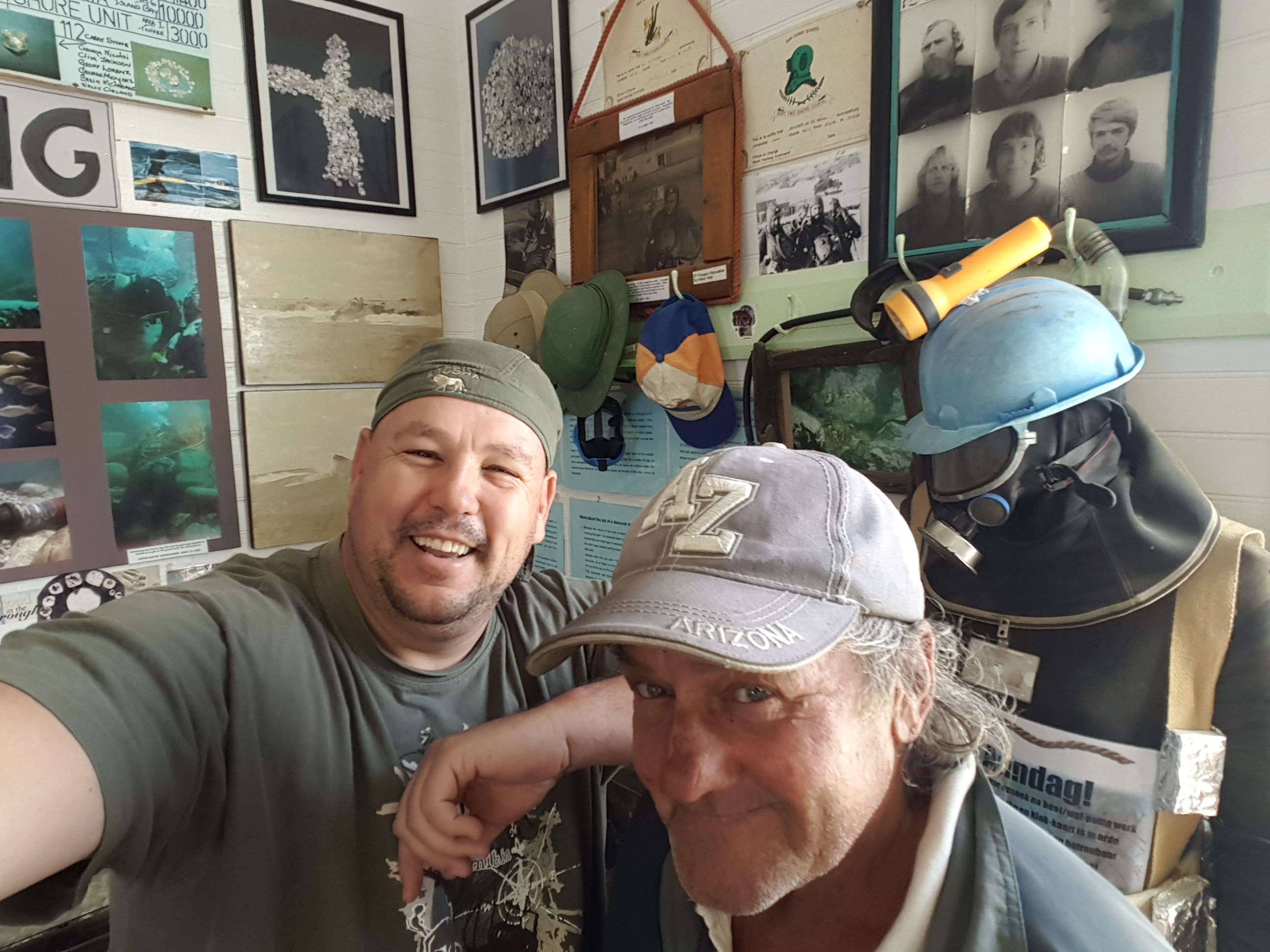
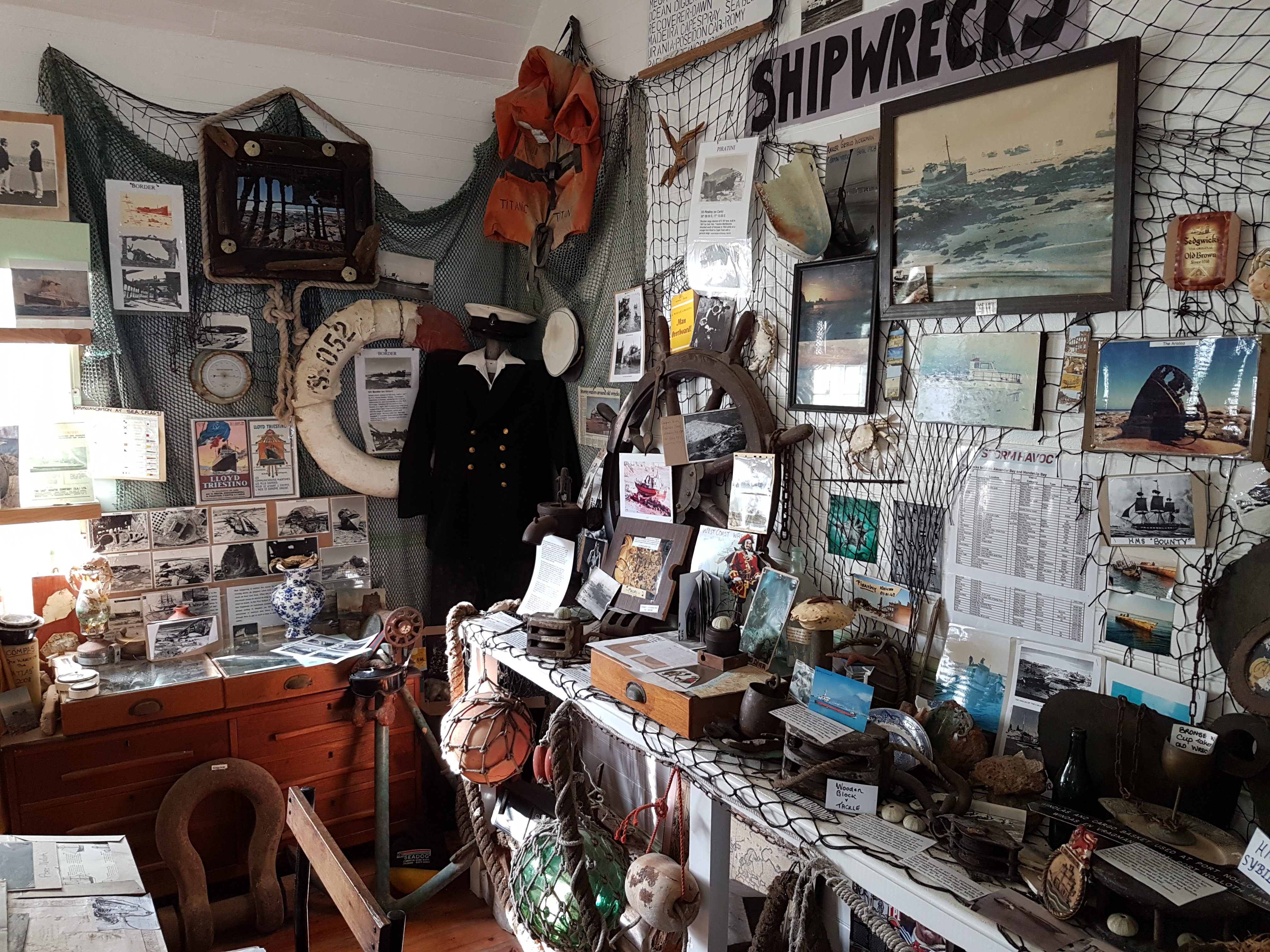
To find interesting people and to listen for hours to their stories. We all have a story that wants to be told. Sometimes you meet a person with such interesting stories you find yourself in their presence and hours feel like minutes. The stories about the old school rough and tough diamond divers to the 2 buddies that borrowed R500 to go try once more to strike it lucky, after they have already lost it all and then found 2000 carats in 4 days! That’s the stuff legends are made of.
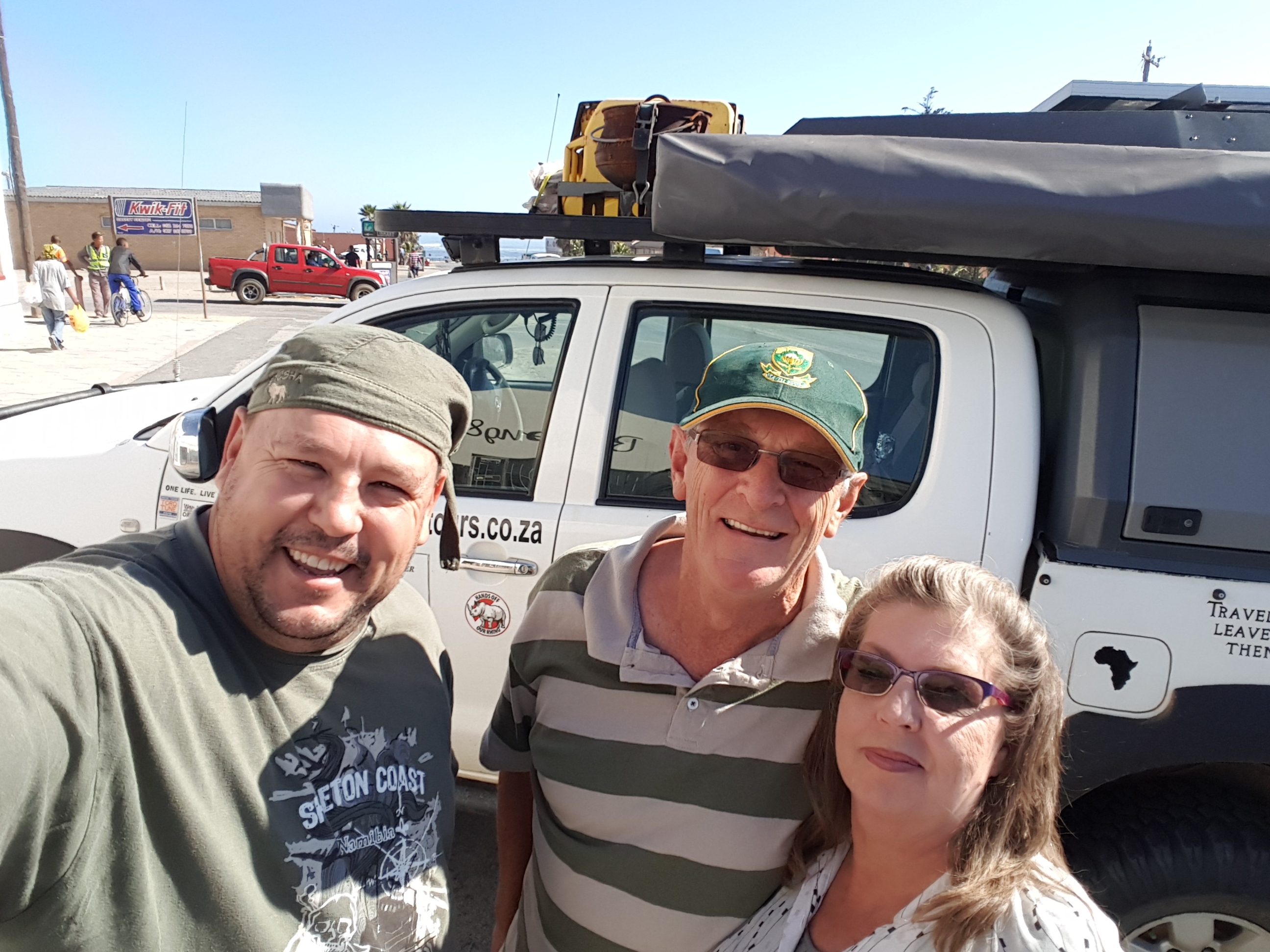
I also met Keith and Avril through a 4×4 Community buddy. What a pleasure to meet them and to make new friends. They told me quite a few stories about this quiet little town. This all was the result of me leaving Port Nolloth for the Alexander Bay Border post at 2 ‘o clock. Much later than what I anticipated but you never interfere with a good story.
The border crossing was quick and painless but I could not help to realize the vast differences between the efficiency of the officials on the SA side versus the Namibian border post. On the SA side, they almost make you feel that you are interfering with them doing nothing. No smiles, no friendly greetings where on the other side of the river you feel like royalty. Great big smiles and sincere conversations. The contrast on infrastructure is just as sharp. How is it possible that a river (border) can divide almost 2 different worlds… I traveled on dirt roads up to now in Namibia that would put many of our tar roads to shame. But this is a long discussion around a campfire for another day.
So lekker om oproepe van pelle te kry terwyl ek ry en wat dankie sê vir die deel van die reis met stories en fotos. Die een is vir jou Johny Dreyer. Sien, ek kan ook in Afrikaans skryf as dit moet.
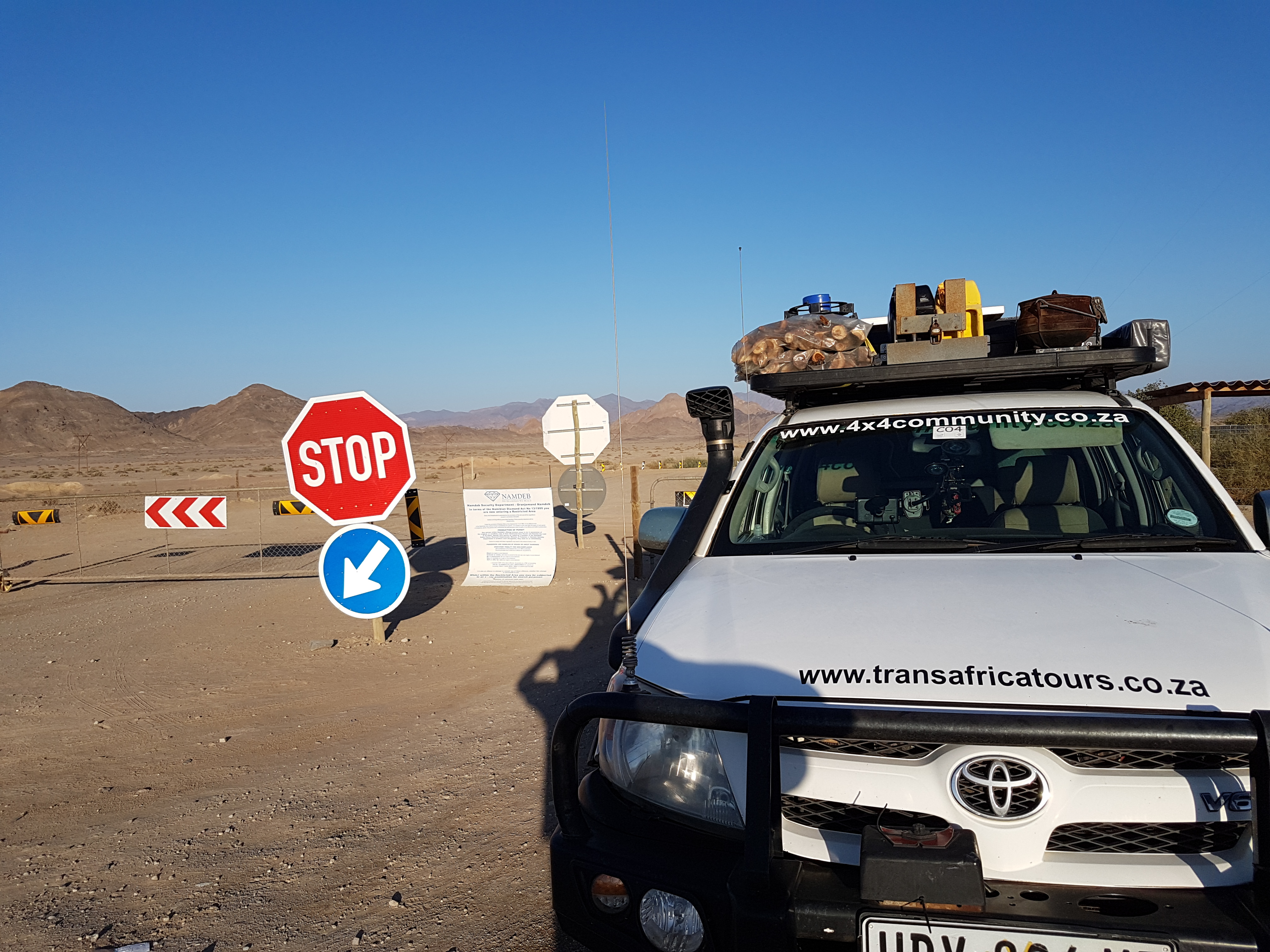
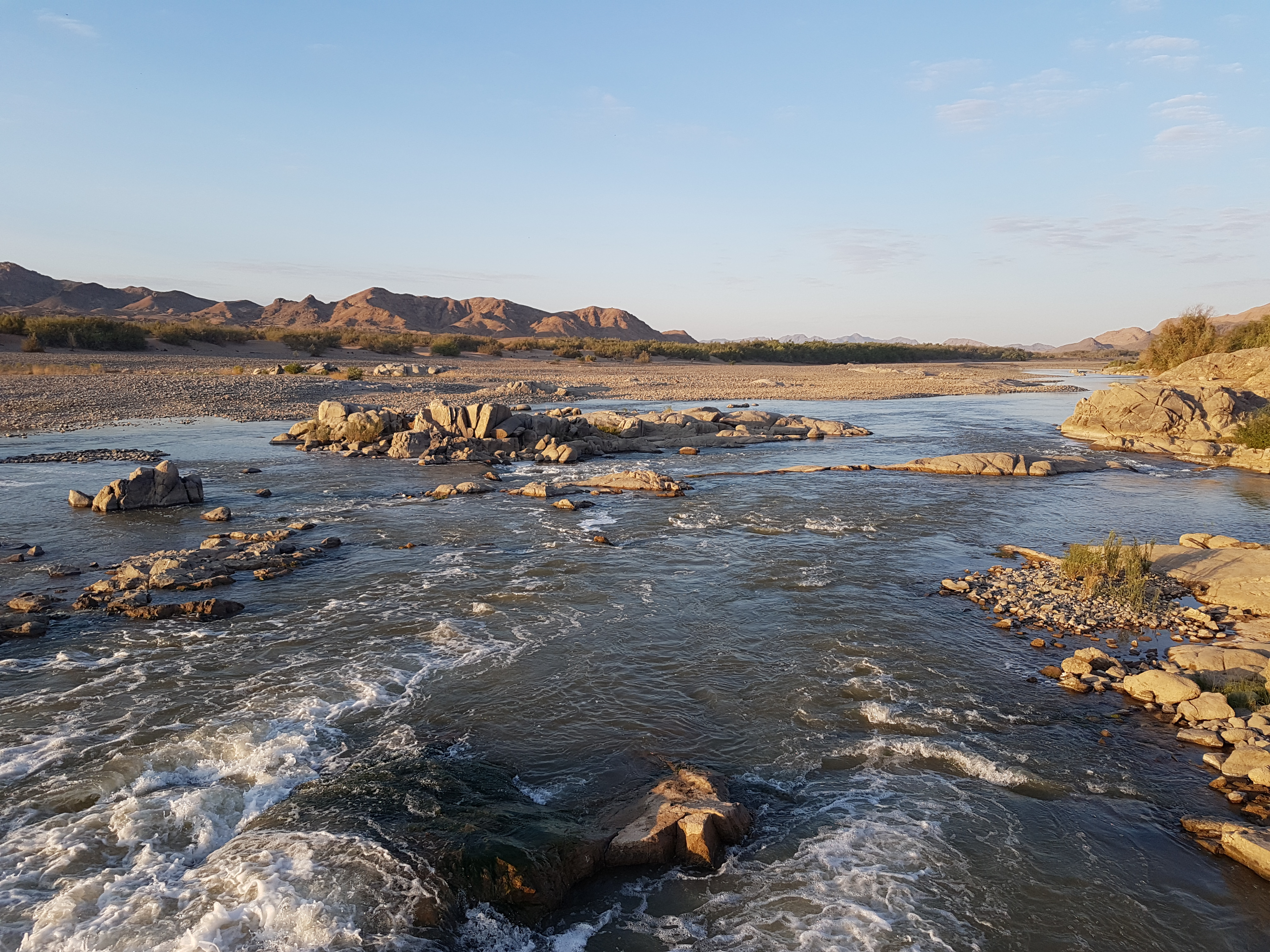
I made my way all along the newly built road from Oranjemund to the Ais-Ais Richtersveld Transfrontier Park. This stretch of road made me stop for pics at least 20 times. Every time you see the vast Orange river snaking through this barren landscape with the green in sharp contrast with the mountains and rocks, it begs for a photo. All along the way, you see the very Iconic Halfmens. Legend has it that the Richtersveld Halfmens derives its name from the ancestors of the Bushmen who were driven south by warlike tribes from the north. Some turned to look back across the Orange River and were turned into ‘halfmens’ (half people), forever gazing northwards. Whenever you see these plants, an image of this legend comes to mind.


After entering the Ais-Ais / Richtersveld Transfrontier Park with the sun already hanging low, I looked for a suitable camping spot while driving on the C13. I prefer wild camping above overcrowded campsites and again, the place I stumbled upon did not disappoint. This place reminded me of what it most probably would feel like on Mars. This park spans some of the most spectacular arid and desert mountain scenery in southern Africa. This is the place to be if you have never heard the noise that silence can make. Absolute and deafening. You have to experience this to know what I’m talking about.
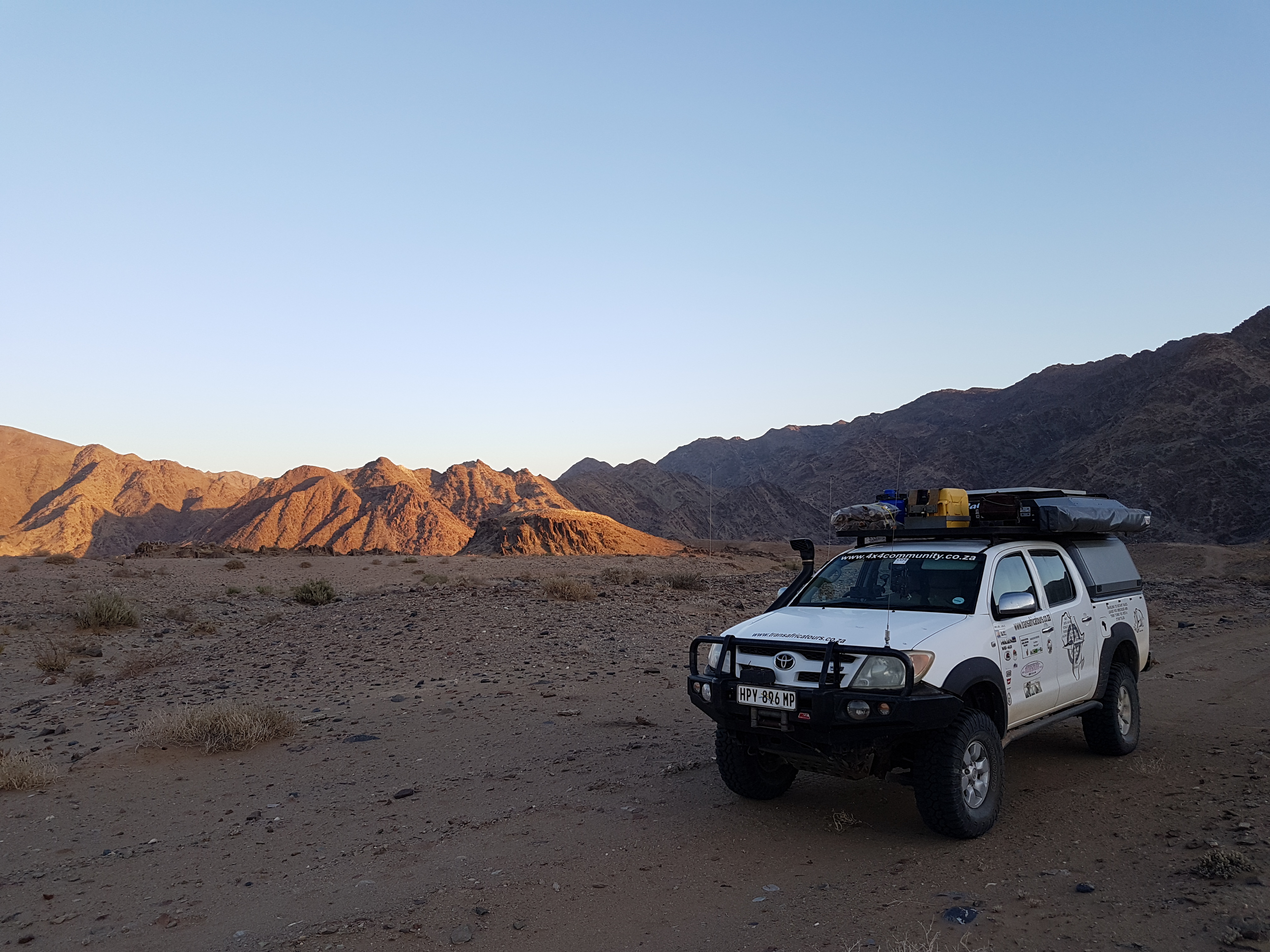
There is some magic in sitting around a camp fire in the vastness of this unforgiving and desolate piece of heaven. Looking at the dancing flames with nothing but your own thoughts, this is hard to describe in words. This is to be experienced to understand.
Tomorrow will be washing and re-organize day Klein Aus Vista. Looking forward doing washing – NOT.
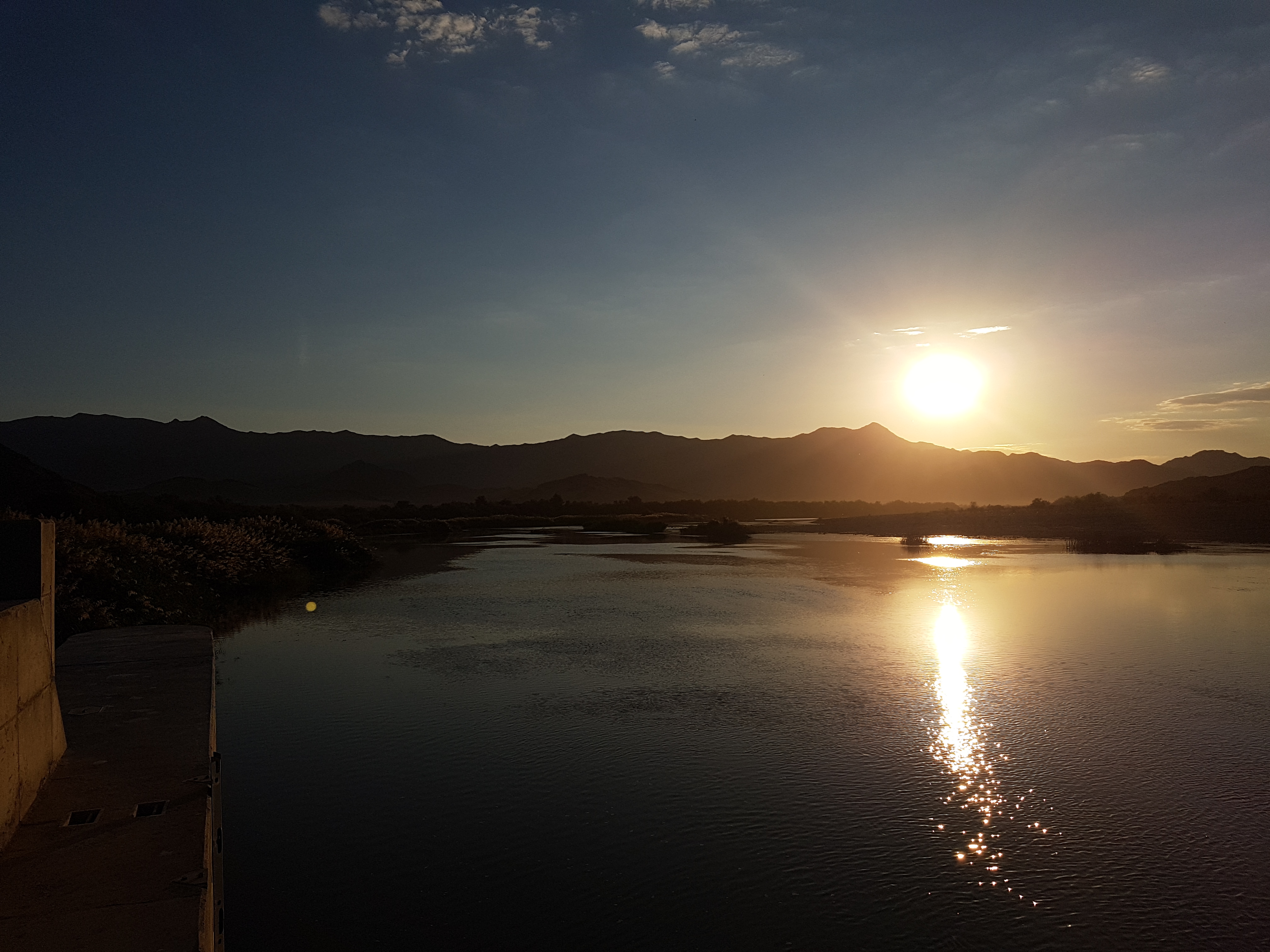
Day 6…..
Aus, wild desert horses and Lüderitz.
It was with a heavy heart that I had to leave this magical Mars land called Richtersveld. It captures your soul in the most beautiful way and it does not want you to let you go. After coffee and rusks, I made my way down to the Sendelingsdrift Border post to find out if the pontoon is working because I might find my way back here and would like to pass through this border post. I was still on South African time and thus one hour too early. In Namibia, they set their clocks 1 hour back during the winter.
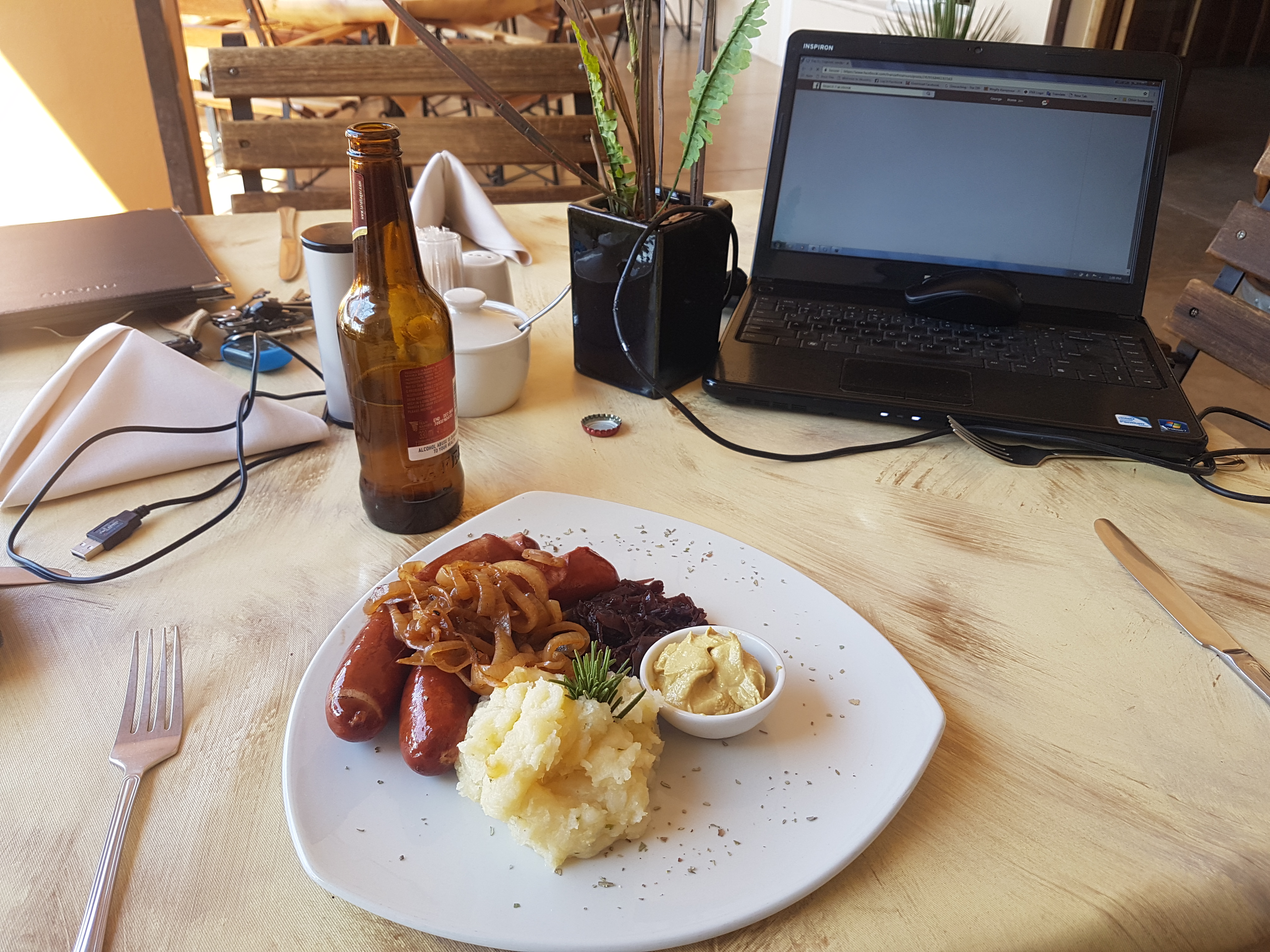
I made my way to Aus from the Ais-Ais National Park. The drive is very scenic with vast flat landscapes with occasional sand dunes against the backdrop of distant mountains. The 170 kilometers on the C13 goes by quickly. My first stop in Aus was at the famous Bahnfof Hotel where I had the most delicious Kassegrillers and mash with Sauerkraut. This gave me time to update the trip report and answer some e-mails. Service and WiFi was exceptionally good. The jury is still not out on where the name Aus comes from, some say its from the word ‘out’ in German, but it also may be derived from a Khoi-Khoi word which means the ‘place of the snakes’.
My next stop was Klein Aus Vista to see if they had available campsites for the night without any success. This made the decision to drive through to Lüderitz much easier. Only one more thing to do en route and that was to look for the wild horses of the Namib. It is likely that some of the feral horses originated from the Schutztruppe mounts, as well as from the those belonging to a South African Expeditionary Force that took control of the Lüderitz-Keetmanshoop line during the First World War. Another theory is that a ship carrying thoroughbreds from Europe to Australia that ran aground near the mouth of the Orange River. The strongest horses could have reached the shore and found their way to the Garub plains. Nobody knows for a fact where they come from. They are very friendly and VERY hungry. I think they are related to Marlene’s Zebras because they immediately came when I said “brott” which means bread in German.

After my time with the horses, I made my way to Luderitz. The battle between man and sand is ongoing on this stretch of road. Mother nature trying her best to reclaim what was once hers. It is an eerie feeling driving on a road with sand blowing across to such extent that you sometimes don’t see the road and on 2 occasions the road works were clearing small dunes that were forming on and next to the road. The railway that runs along this road has given up the fight a long time ago and parts of this railway are covered by big sand dunes today.

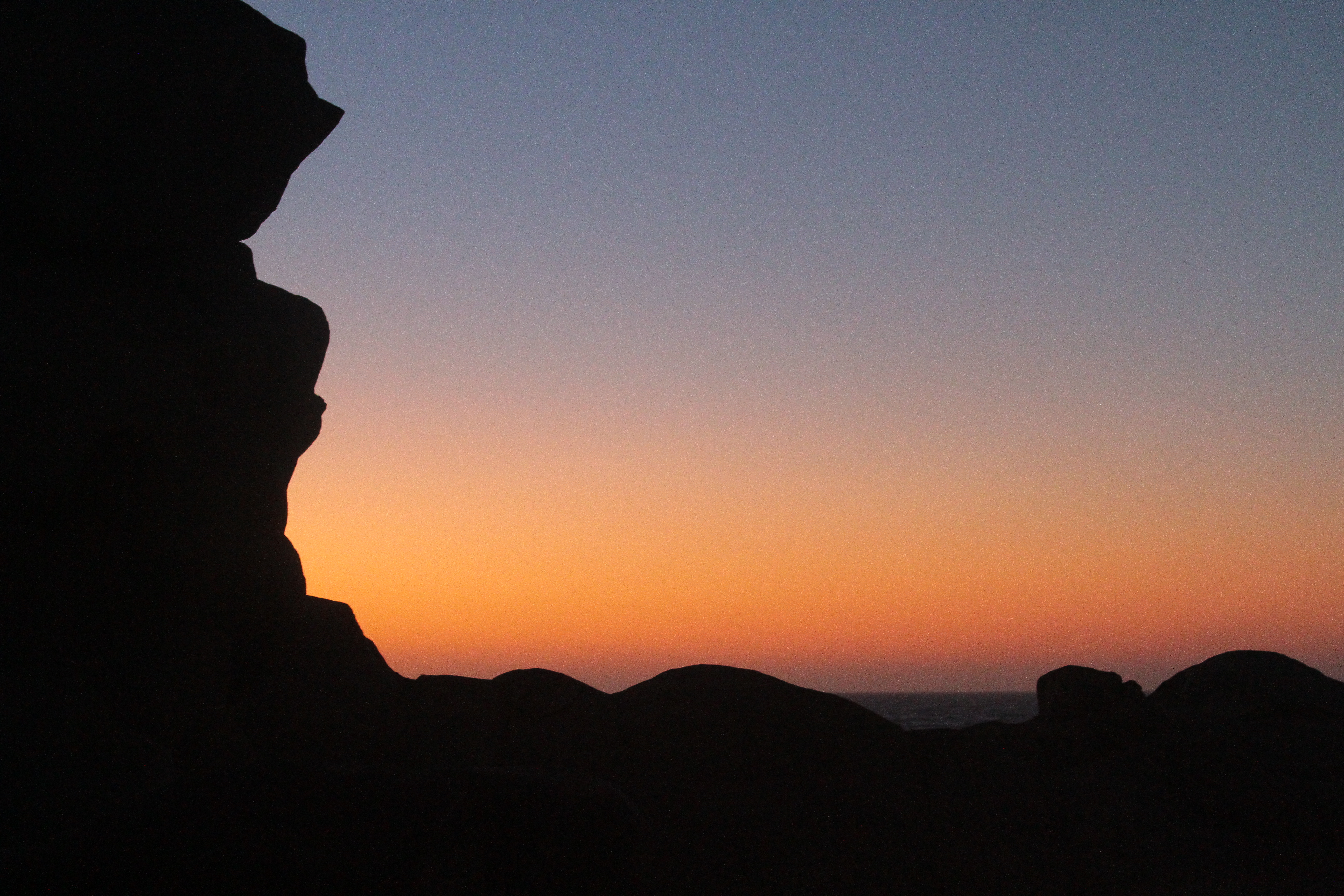
Lüderitz is almost a Kleine Walvisbaai. The look and feel are the same. It has that same old German charm and the people are very friendly. I will be spending the next 2 days here to explore and experience what this little town has to offer. My base would be on Shark Island. A beautiful campsite with extraordinary views.

he trip so far is one hell of a journey. The more I travel and the more I experience, the greater the “Wanderlust” in me grows. The urge to see more of the “off beaten track” places and people. There is a kind of unnatural pretentiousness in the normal touristy places…….. It’s almost like a well-rehearsed play of what to say and what to do to just earn the next dollar but then again one must visit these places and see and do these touristy things to get the T-shirt. Can’t wait to be on the road again tomorrow to discover and explore the unknown roads, places and people as I will slowly start making my way back home.
Day 7 & 8…..
Lüderitz, tar roads and hidden gems.
Wednesday was laundry day and all the normal touristy things to see and do around “Kleine Swakopmund” because that is wat Lüderitz feel like. Time has no bearing in this place and there is a very laid back pace to this coastal town.
I took a drive out to Diaz point. The drive itself takes you through a moon landscape that makes you feel small against the forces of mother nature with evidence of her wrath clearly visible all around you. Nowhere is the eternal battle between mother nature and man more evident than on this coastline.


Dias sailed into the inlet known (today) as Lüderitz Bay and in true Portuguese style a padrão (Cross) was raised, dedicated to São Tiago (St James) and erected on 25 July, (St James’s Day) 1488. The stone beacon remained undamaged, less for weathering by the Atlantic winds and surf pounding against the limestone sides, until the early 19th century. In 1825, entries into the captain’s log of the HMS Barracouta recorded that officers and members of the crew had found the padrão uprooted and broken. The bridge to the cross (replica today) is destroyed by the forces of nature and thus not accessible.

After taking pictures of a very rough sea at Diaz point, I made my way to Grosse Bucht (Big Bay) at the southern end of the peninsula.This is a wild and scenic beach. Although I did not spot the very elusive Strandwolf, I saw its spoor. It’s kind of eerie to experience this remoteness and wildness by yourself without another soul in sight. It gives you a glimpse into what it might have felt like for the survivors of the many shipwrecks along this coast.

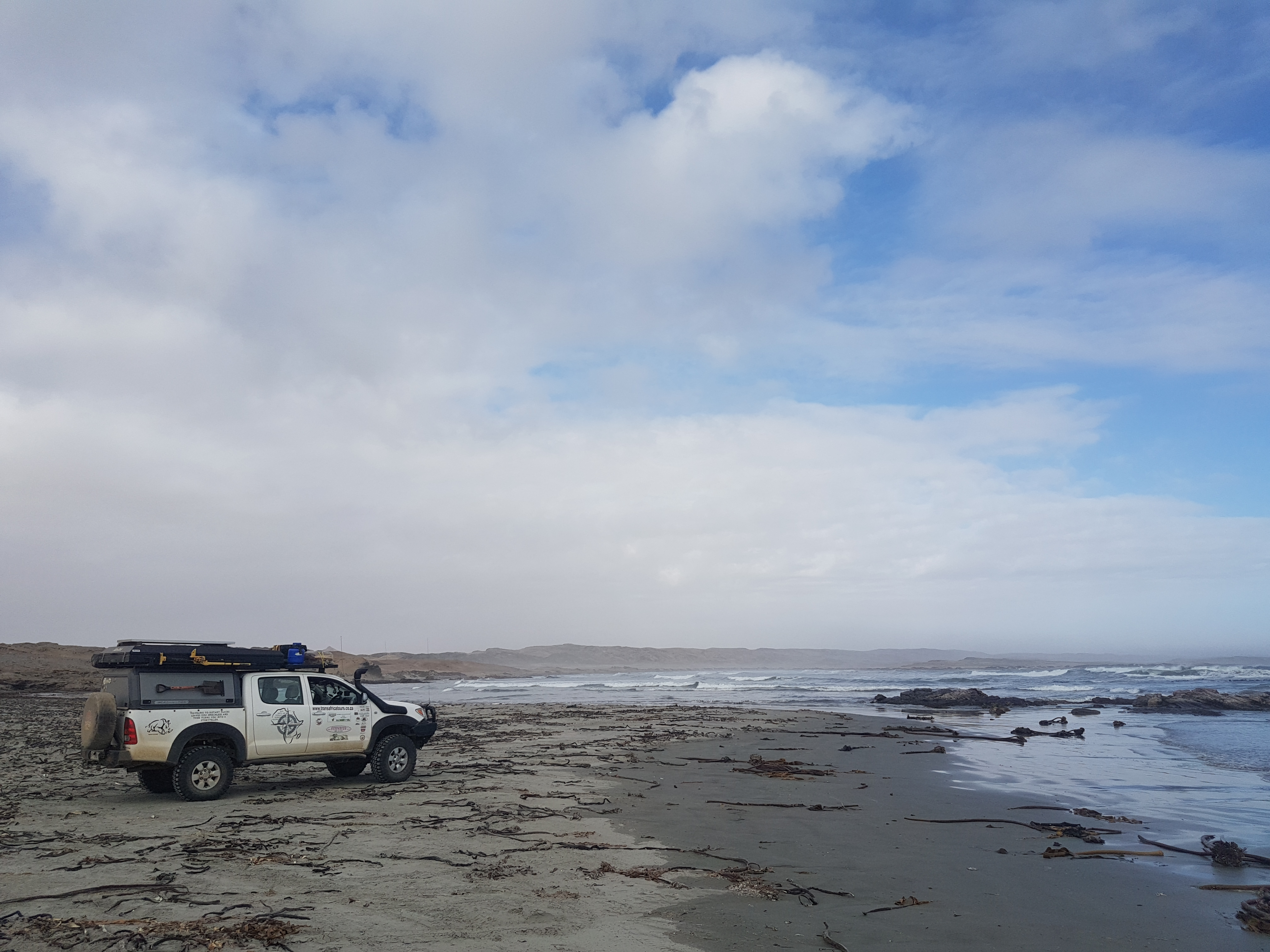

I camped on Shark Island and the wind was very mild to almost non-existent these 2 days. The ablutions were very clean and tidy. This is a very good base to explore Lüderitz and surroundings from. The harbor gong/bell on the sea serenades you of to dreamland with the gong gong sound out in the harbor mouth.
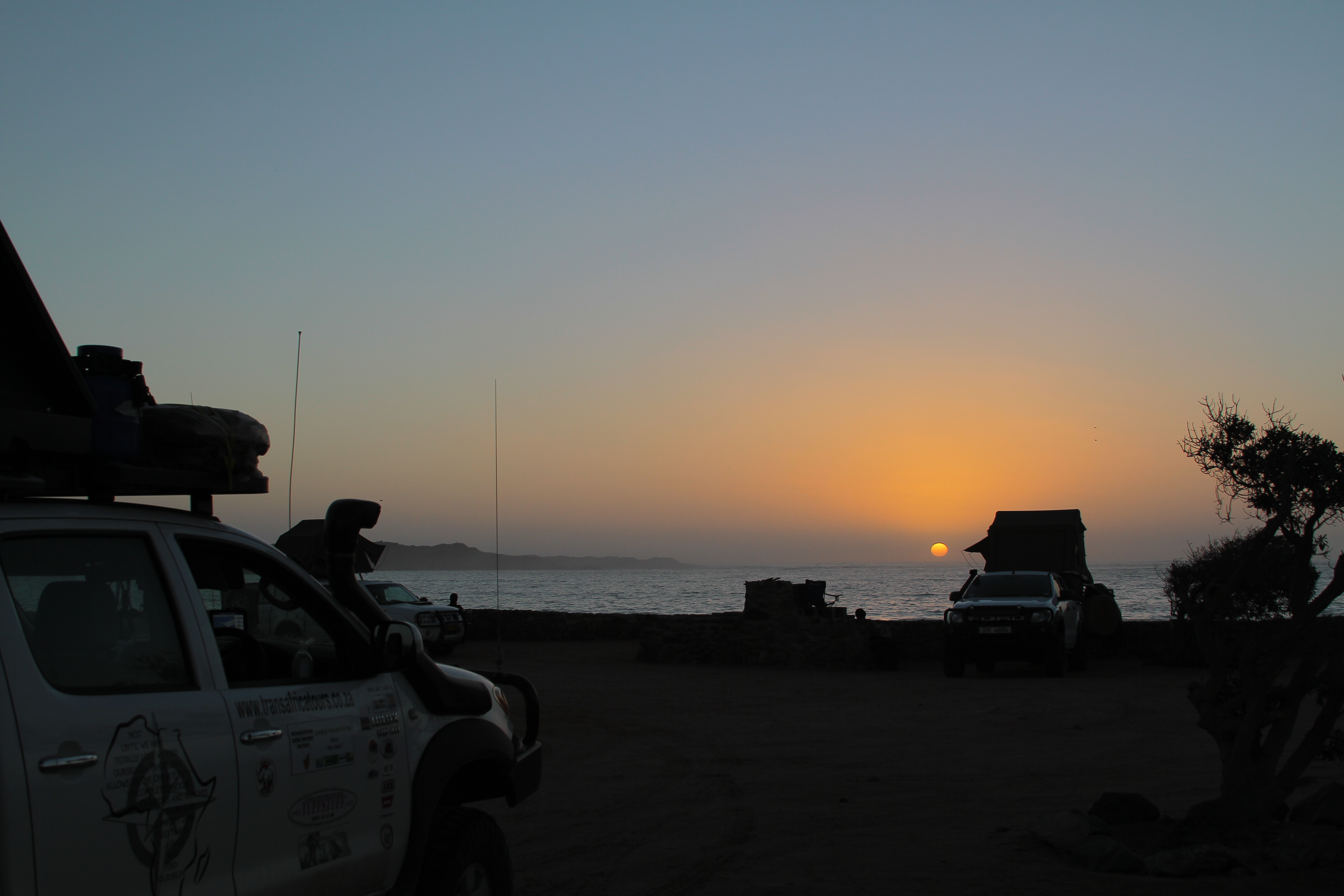
On day 8 I started my homeward journey via Konkiep to Seeheim on the B4. As I was contemplating how boring tar roads was, I looked for any excuse to turn into a farm or dirt road. I found a farm that sells old school ginger-beer and the most delicious Russian droëwors, not only are all meat very cheap – the staff’s funny and friendly. Paid R36 for half a lambs rib and R20 for 3 boud chops.
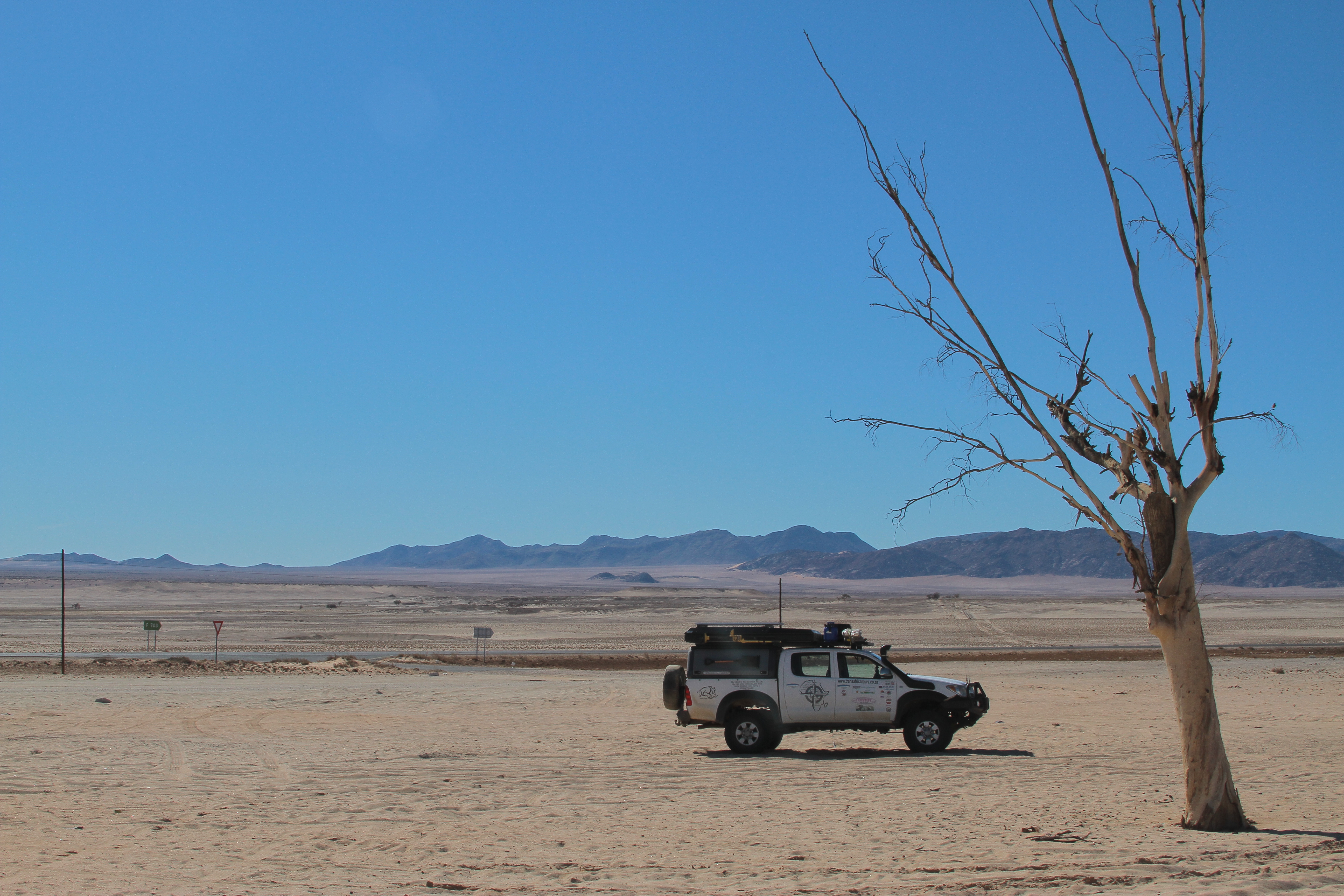
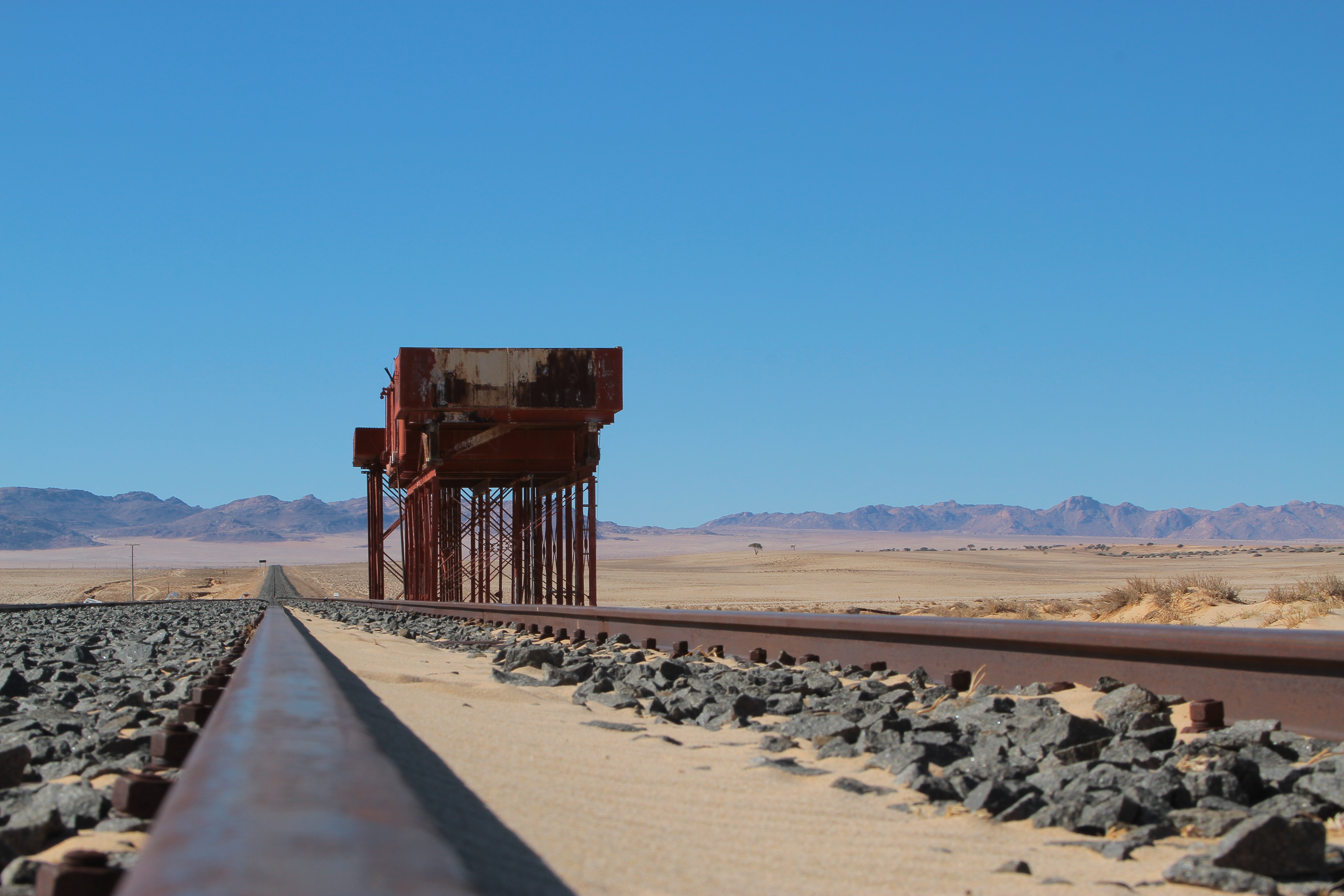
Not much further I discovered what must be the best-kept secret of 2017 and the reason why I did this recce trip into the South of Namibia. I found another piece of heaven after turning around to see what Alte Kalkofen Lodge is all about. I was blown away by this gem of a place. It is owner managed and again I had an internal battle to publish this or to keep it to myself. The Kalahari ambiance is overwhelming and the setup and decor are magical. This destination is definitely on my next tour itinerary. In all honesty, I would rather spend time here than at Sossusvlei.
A whole new plant world was opened for me today when I had the opportunity to be schooled in Lithops (Beeskloutjies). These plants are fascinating and to listen to somebody that tells you with passion about them, is not only informative but also rewarding. I don’t want to spill the beans too much about this hidden gem, you should come on the next tour to see for yourself what I am talking about……
Last but not least. I came to realize that journeys like this takes you places and allows you to meet people that make a positive impact on your being. It enriches you as a human being and you will not experience these encounters if you don’t take the turnoffs and back roads and if you don’t take the time and effort to listen. I still believe that everybody has a story to tell. Stop at the bokwagter next to the road, give him a coke and listen to his story. You might be pleasantly surprised……

Day 9…..
Leaving paradise, dream roads and the usual touristy places.
Let me start to say that it’s with both happiness and a bit of sadness that I write this journal entry for day 9, after 4 days in a bliss of no reception, almost non-existent WiFi and zero contact with the outside world. Happy to be back “online” writing this and a bit sad to leave behind the solitude and simple life that no social media and or reception brings. Southern Namibia has no reception other than the edge around villages and towns and the WiFi at the normal tourist establishments are even worse. Not even worth trying to log in….
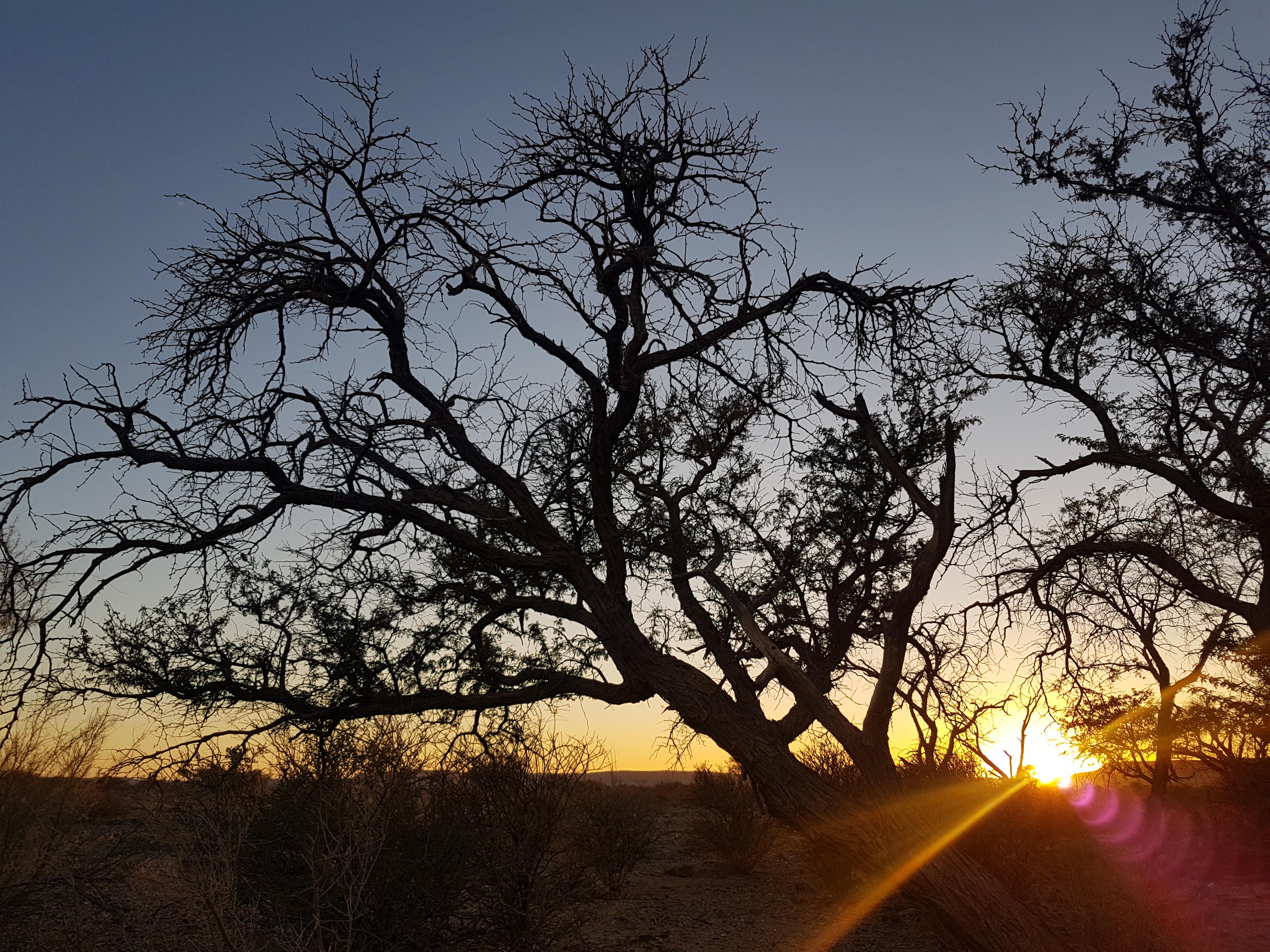

IAubasens (Nama word for hope). This is the name for the campsite I was at. As I was sitting there looking at the most beautiful of sunrises, I thought of a quote by Ram Charan – “The sky takes on shades of orange during sunrise and sunset, the color that gives you hope that the sun will set only to rise again”. Those that knows our personal story will appreciate the impact this had on me at that moment. Just when you think all is lost you still have hope and as long as you have hope, you have something to cling to….. Never lose hope !!!

After breaking camp and leaving “Shakity City” on the farm Alte Kalkofen, I took a scenic route on the D462/D463 road to Seeheim as my next stop. This felt like driving somewhere deep in The Kalahari with old Camel-thorn trees and red sand dunes.
I had a completely different picture of Seeheim in my mind. I imagined it to be like a small town and not the hotel/railway station I found. Time has yet to catch up with Seeheim, and I think time has forgotten about this little jewel between somewhere and nowhere. The hotel bar is like I remember bars to be about 30 years ago and the mascot African Grey and Sheepdog are very friendly. Even the Gemsbok that thinks he is a chicken, allows selfies to be taken with him. Do yourself a favor. Do the little effort and get off the main road between Keetmanshoop and Aus and drop in. You will be pleasantly surprised.
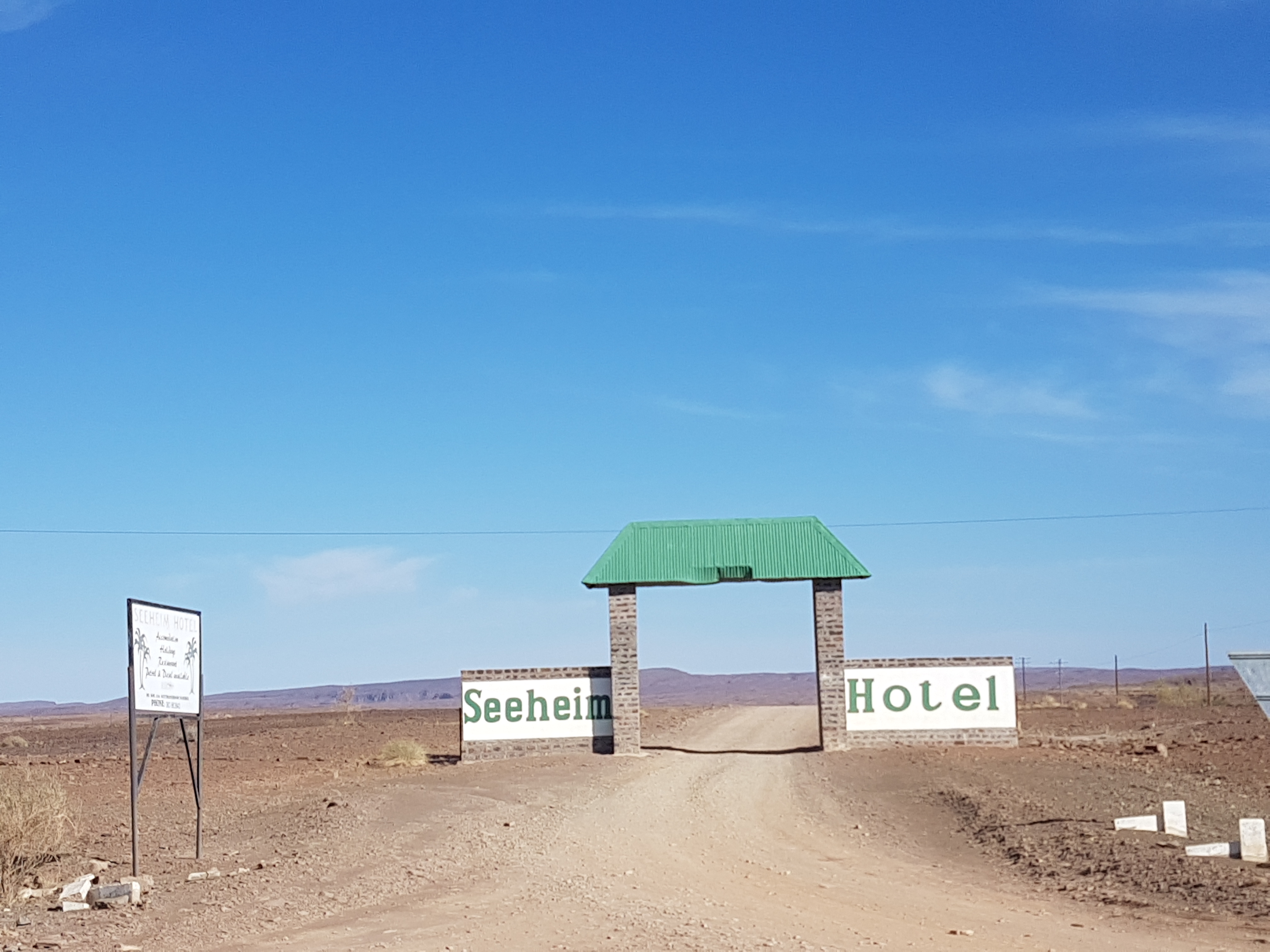
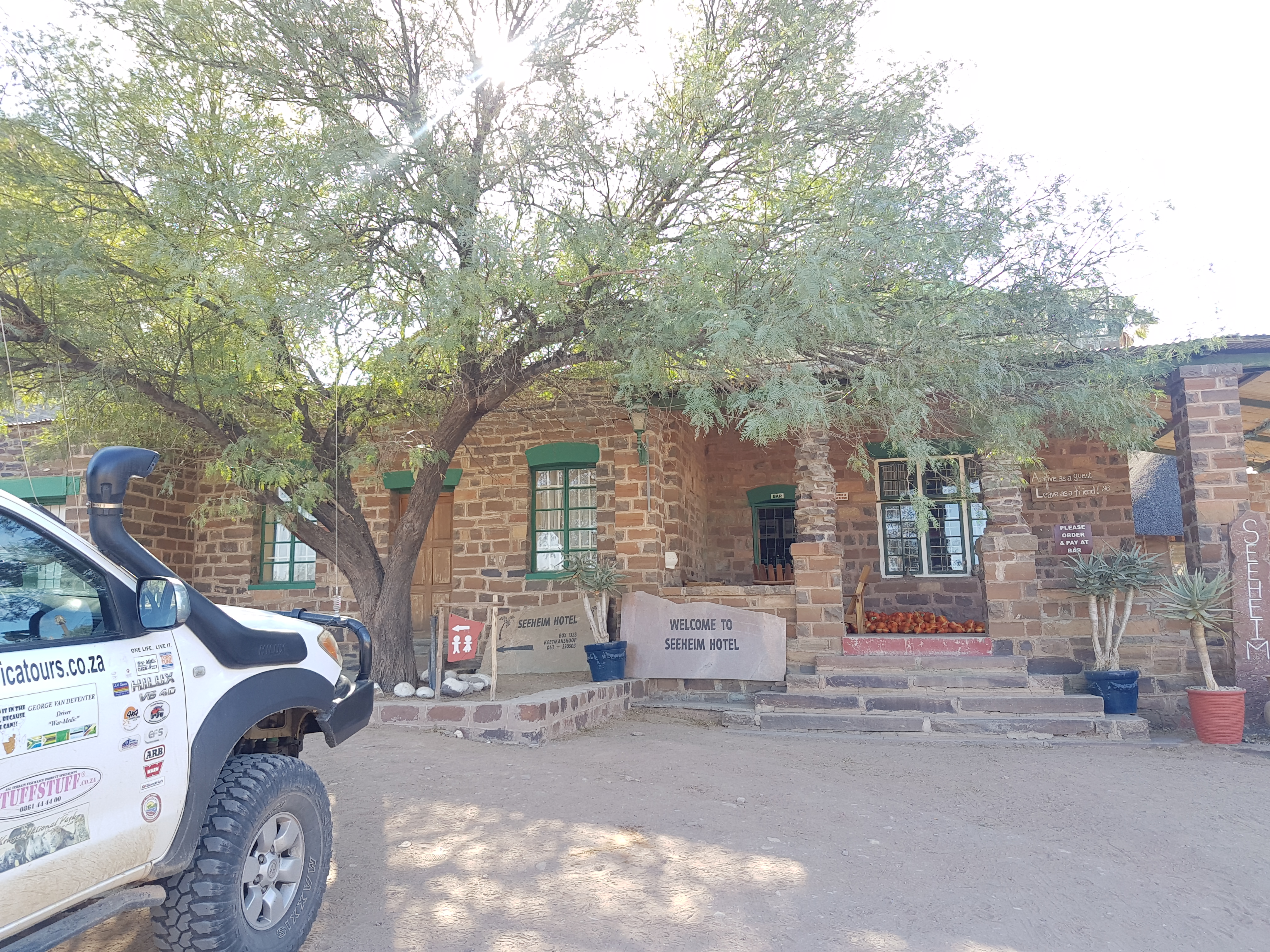
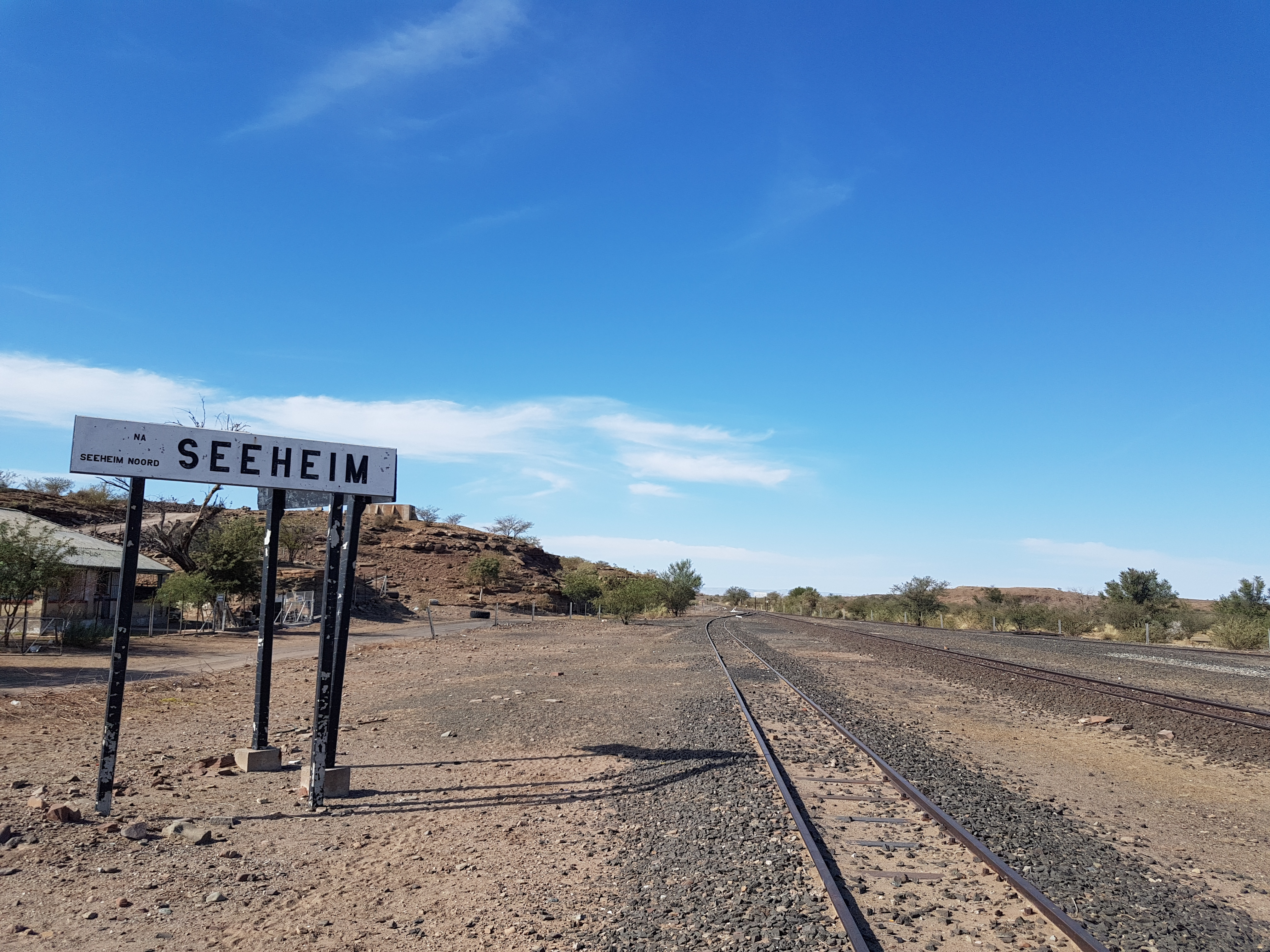
I took the C12 South to see what treasures this road might be hiding. The road next to the official road should have been enough to say turn around but noooooooooo, let’s drive this road – I thought, it will be fun I thought. NOT !! This must be the worst piece of road the whole trip and given that it’s in Namibia was more of a shock than anything else. Roads in Namibia are usually very good but there is a reason why this road was so bad and that I found out not much later that day. I stopped to have a chat with a guy (not very talkative) on his bicycle doing a trip from Estonia in Europe to Cape Town. I guess the heat and “Africa” got to him because the conversation went something like I would ask him something and all I got in return was yes or no, although he could speak very well English.

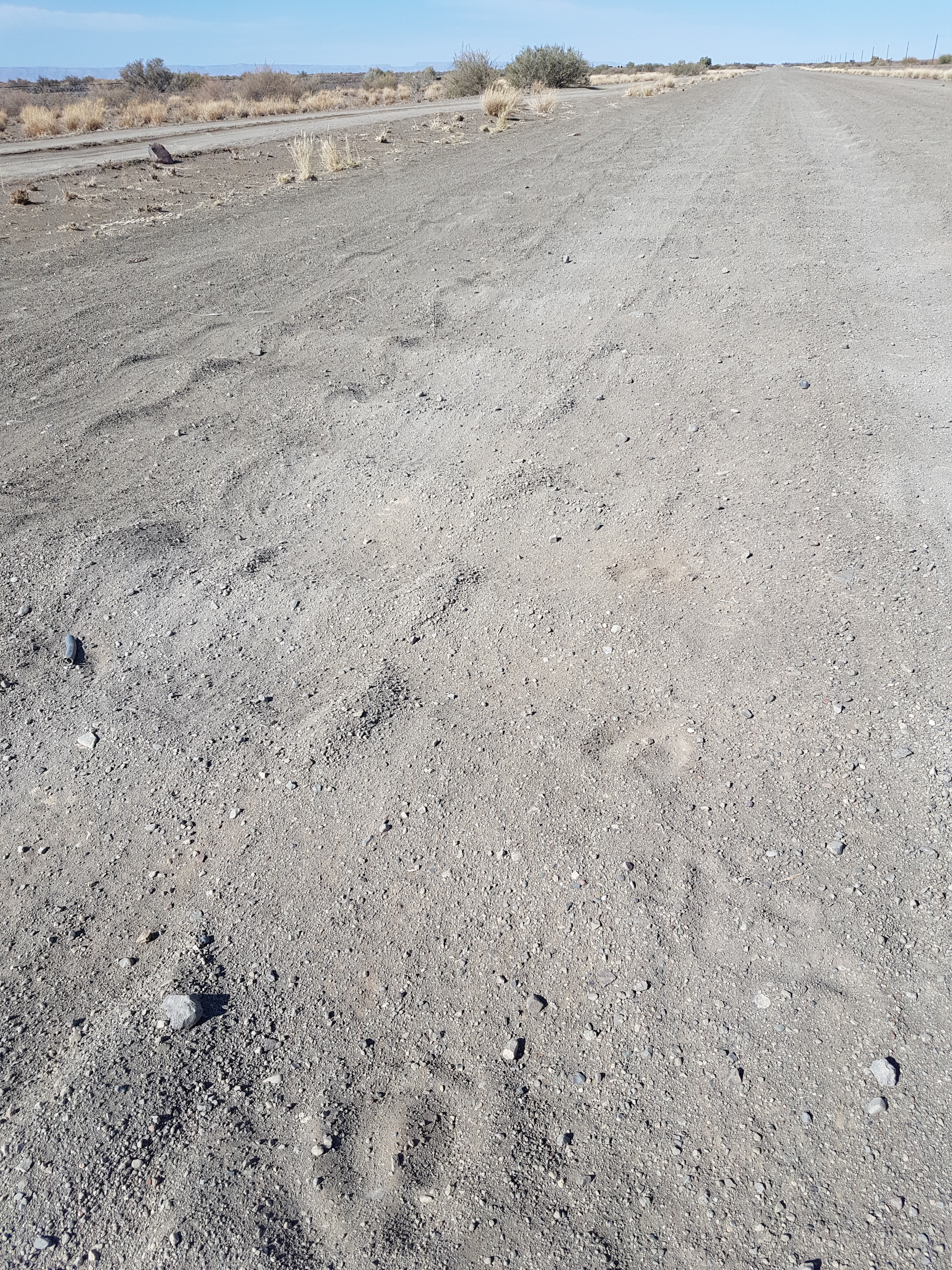
After the teeth shattering 28 kilometres, I came to a dream road, where the D545 meets up with the C12. This road stirred so many emotions in me that it would be hard to describe. It might be that I was just too happy to drive on this glorious road or it might just be that the culmination of the whole trip, the scenery and the prospect of finding new places ahead, brought a euphoria of happiness and it struck me that genuine true inner peace and happiness is not a destination, it’s time frames with distinct memories of times and places. For me at that point it was the feeling of “I would not want to be anywhere else on earth, doing anything else than just drive on this road”. Like I said – very difficult to try and describe……….
My next stop after driving past and turning around was Bauernhoff Stall. If you thought that the Apfelstrudel that Moose McGregor made was good, you’ll have to try the Strudel here. It was as good and if not better! Mark my words, this will become the “2nd” Solitaire on the way to the canyon. I had a nice and long chat with the owners and they are very friendly and very hospitable. This is my new favorite stop for the German dish that made Solitaire what it is today…
Namibia is littered with German War Graves and this road was no exception. I came across two German war graves, from the Herero War of Rebellion (1904 to 1907). Both soldiers had died in 1906, Corporal Rob Lietz (21 yrs) and Cavalier L Lichte (27 yrs). Both died young and buried far away from their beloved homeland Germany, a poignant reminder that Namibia is a beautiful, but harsh country.
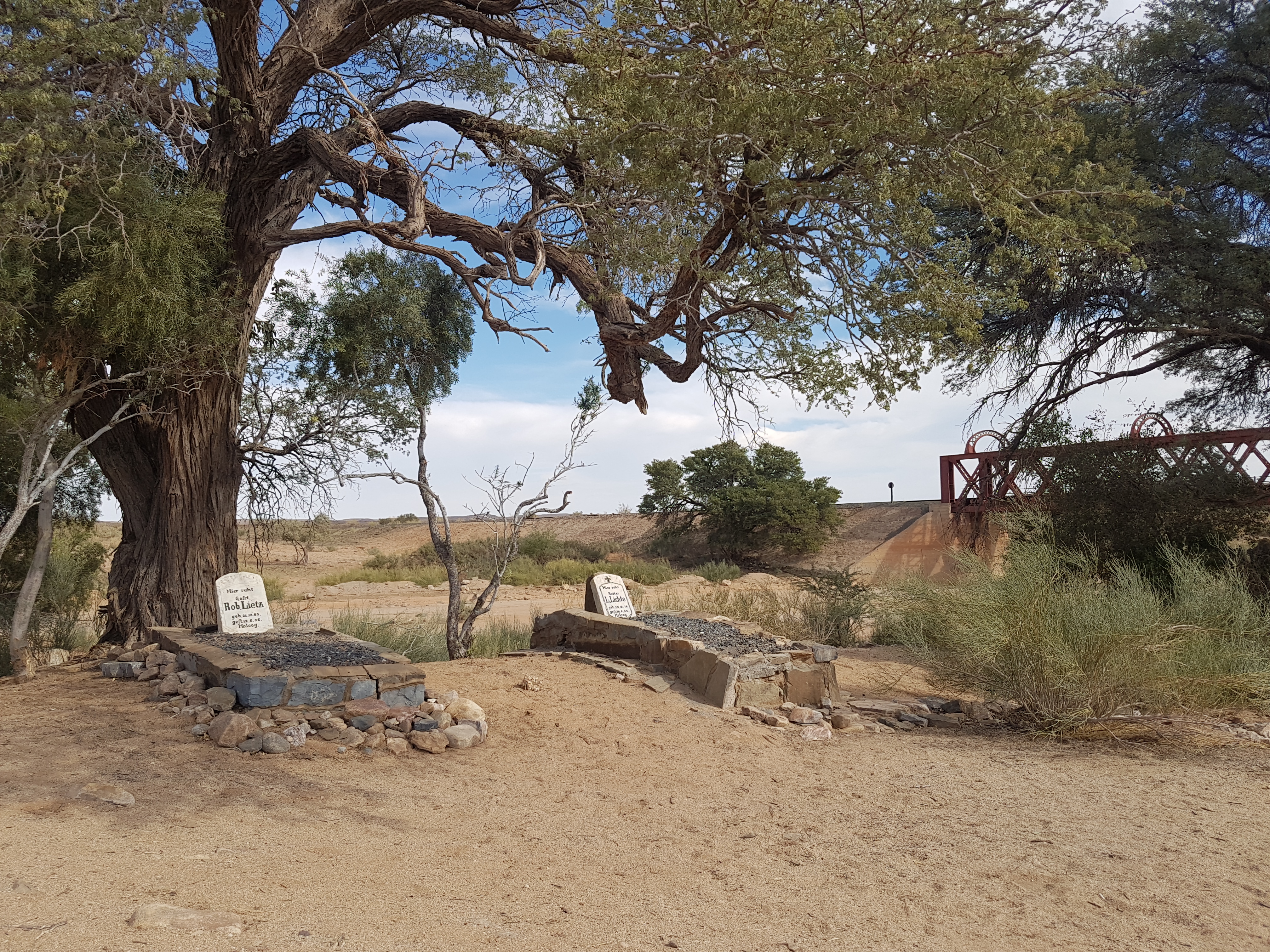
Then came the last stop of the day. I found myself sitting in the bakkie not sure to get out and do the Canyon Roadhouse thing. I have developed this sense of almost not wanting to do the normal touristy things. Trying to keep it simple and off the beaten track and this felt like cheating. As I was contemplating somebody knocked on my window. I got out and to my surprise it was a fellow 4×4 Community member. I finally got to put a face to the SuperHansie name and we shared a few thoughts and got e few leads on awesome trails in the Richtersveld.


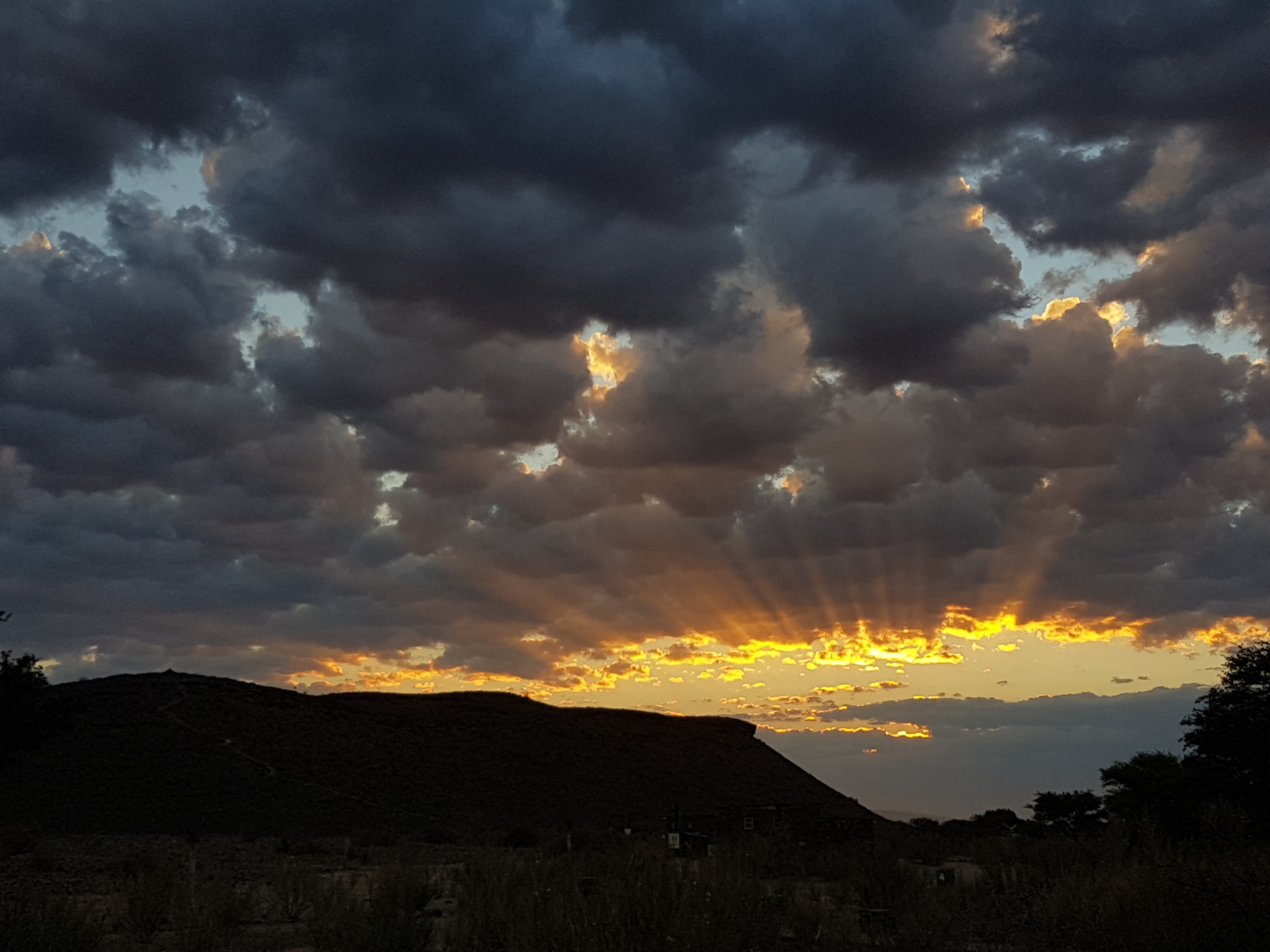
Part of me stayed at this place because of the promise of WiFi and the means of updating the trip report but to my dismay this was not even worth logging into, but at least the sunset was extra extraordinary. It looked like the sky was set on fire and I had 3 Gemsbok for company that night as they were eating the pods of the Camel-thorn, loudly around the bakkie…………

Day 10…..
Canyons, overland trucks and the Broederbond………
The trip was nearing its end and with each passing kilometre the urge to extend it with just one more day became stronger, but I knew this would result in every day extending it with one “more day”. This road trip/tour was like a wonderful dream you don’t want to be awakened from. Each day brought brand new places and people and experiences. I learned that the journey is far more important than the arrival or departure. It is people and places that make it interesting more than the where to or when. A lot of valuable lessons were learned and a lot of stories needs to be told.
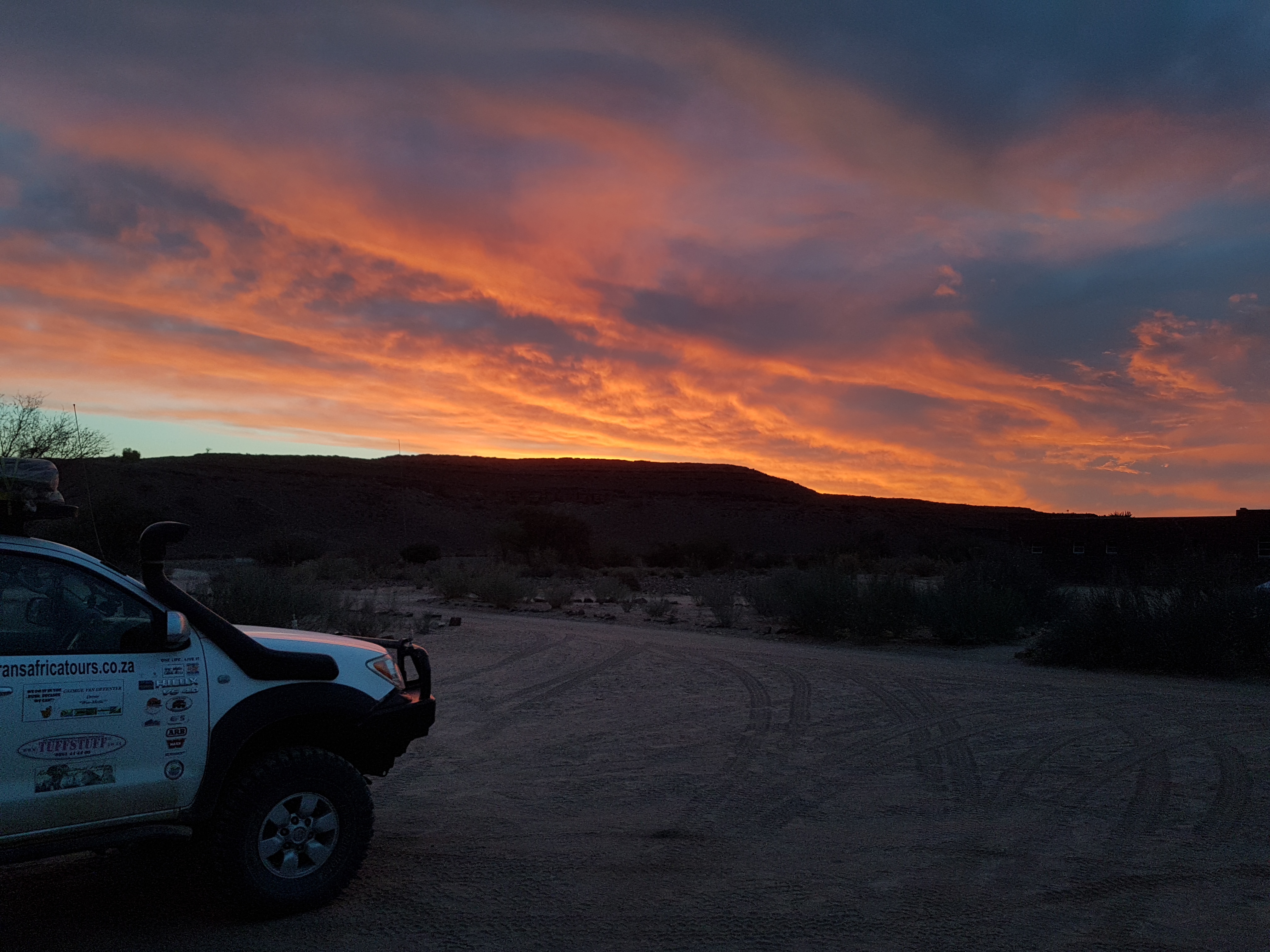
I awoke with the most beautiful sunset in a stunning setting and just when you think the previous sunset or sunrise could not be outdone, you are pleasantly surprised by the show of display when day and night dance together for a fleeting moment. Sunrise also brings the promise of a new day. This made me realize that not everyone was privileged to see another sunrise like I did, the breath of life isn’t for sale but a gift and it’s up to you to make the most of it.
This was making my day better after the noise the overland truck made arriving late last night with noisy American tourists. The breaking of camp at 5 in the morning was worst. For the love of me, I’m trying to understand why all the tent poles need to be thrown against each other and why the truck needs to idle for half an hour. This is what makes me seeking solitude in unknown places off the beaten track. Whenever I see an overland truck parking itself near my campsite, I just think “here we go again”. Which is why some private campsites don’t allow overlanders camping there anymore.
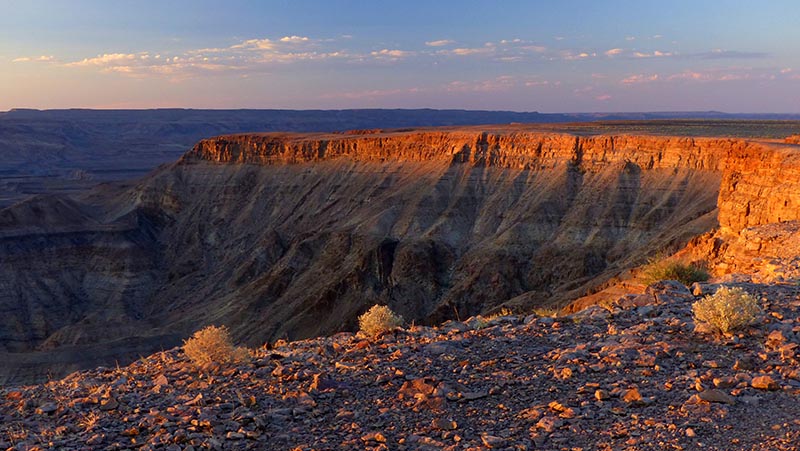
After coffee and rusks, I was on my way to the wonder called Fish River Canyon. This canyon is an enormous chasm which cuts through the granite uplands of Southern Namibia. In terms of volume, it is the second largest geological feature of its type in the world, after the Grand Canyon in the USA. Standing on the verge of this canyon makes you feel so small in the bigger scheme of things and again the pics you try taking does an injustice to the scene in front of your eyes. To me, this is one of the very few places on earth you can literally feel the magnitude of Earth-time in relation to the fleeting brush of human life as you stand on the canyon rim. Our imagination and time frame can not even begin to phantom the ages it took to carve out its way through earth and rock. This leaves you humble and appreciative to be able to witness this wonder.

The calling of the hot springs at Ais-Ais became louder in my mind and after tearing myself away from this wonderland, I made my way slowly towards the hot springs. The roads were in a perfect condition and made driving on them a pleasurable experience. The road itself winds through the most breathtakingly beautiful landscape with opportunities for National Geographic photos around every bend. I lost count of how many times I stopped for just one more pic. I was even lucky enough to catch glimpse of the very rare and endangered Hartmann’s Mountain Zebra.
The Ais-Ais resort is set at a sulfurous hot spring, which makes perfect sense as the name ‘/ai-/ais’ means ‘burning water’ in the local Nama language. It indicates the extreme heat of the hot springs, which date back to 1850, when they were discovered by a Nama herder, searching for his lost sheep. It was very relaxing to slip in the hot water but more difficult to get out because you promise yourself just another 10 minutes time and again. The camp is very well kept with minor ongoing renovations. The temptation to camp here was big but I had to move on to get closer to the border. There was another silent calling deep in my soul that I could no longer ignore. I had to get across the border early the next morning.
After the dip in the pool and buying some fresh Portuguese rolls, I was on my way to Amanzi river camp near the Vioolsdrift border post. I was greeted by the most beautiful rainbow near the village Aussenkehr, from where the road follows the Orange river down to the border.
Amanzi River Camp was the ideal end stop over on my Namibian adventure. Green lawns, ample shade, a spectacular view across the river onto the Geelkrans cliffs and clean ablutions with good water pressure and hot showers were more than what I could have asked for. The next door camper neighbors left no topic untouched in their chats around the campfire that night. From old NG Kerk dominie’s that were the secret scouting and recruiting agents for the broederbond right through to the hidden Kruger millions. No topic was off limits. These talks made me laugh with my hand over my mouth some time into the night while lying in my rooftop.
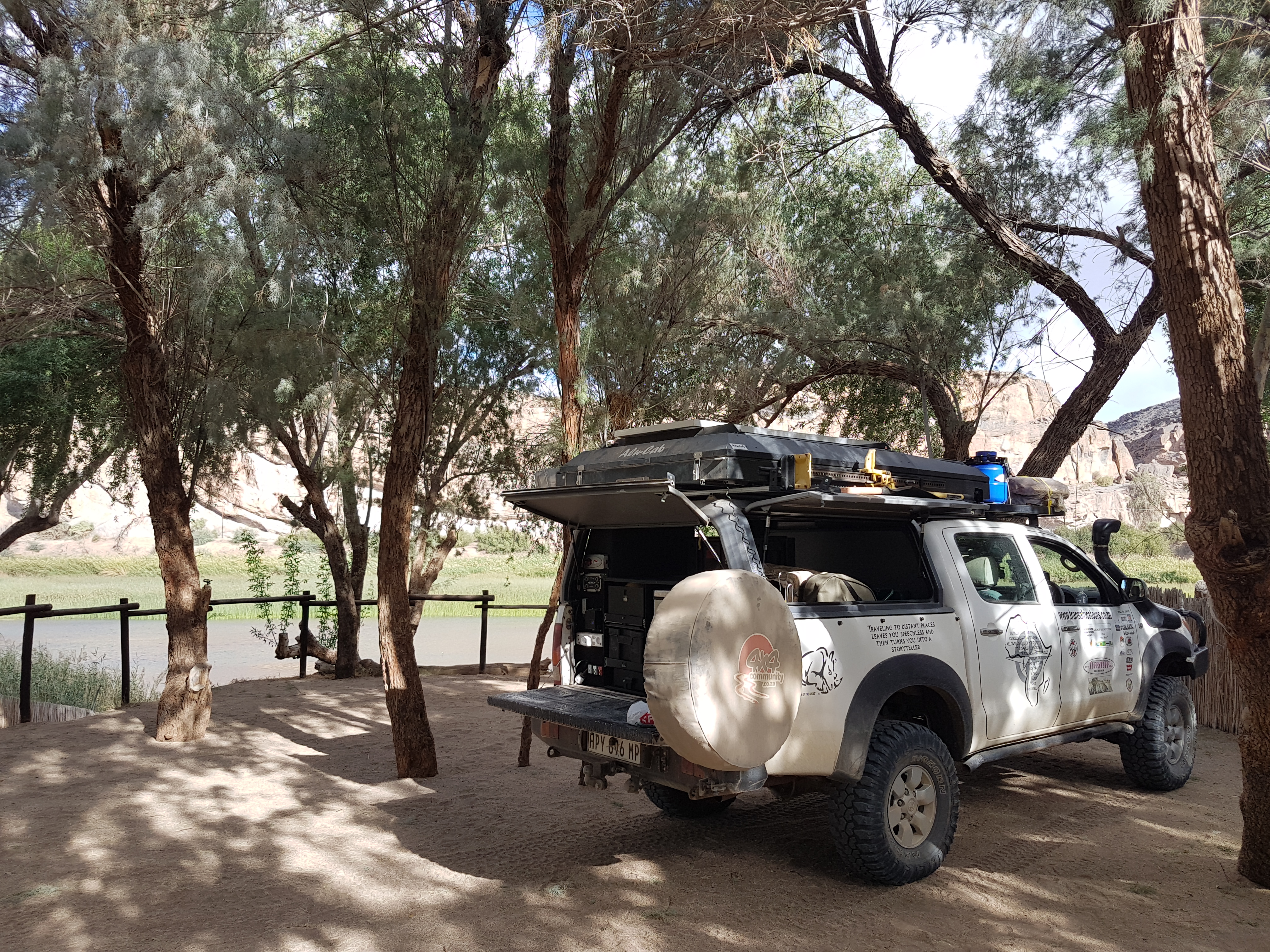

Somewhere in the night, I was awakened by the hoot of an owl close by. One of the many “musical” sounds of the African night. Throughout history and across many cultures and even in our own Afrikaner culture, people have regarded Owls with fascination and awe. Few other creatures have so many different and contradictory beliefs about them. Owls have been both feared and venerated, despised and admired, considered wise and foolish – and associated with birth and death. I just love the sound of them. Owls to me are the most fascinating and mysterious of all birds.








 Trans Africa Self Drive Adventures and Tours