All posts by George

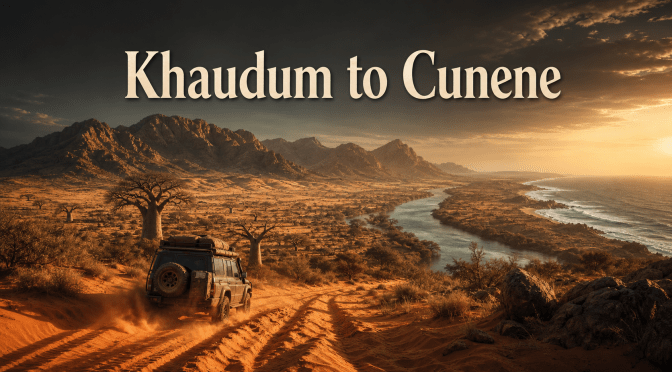
Khaudum to Cunene 4×4 Adventure

Get ready for an unforgettable overland adventure through some of Namibia and Angola’s most remote, wild, and rewarding landscapes.

Price:
R18 650-00 p/p sharing

2 – 14 June 2027

Our journey begins in Tsumkwe, gateway to the Khaudum National Park. From here, we head into the deep sand tracks of Khaudum—proper 4×4 country where momentum, tyre pressure, recovery gear and teamwork all matter. Expect challenging sand driving, remote camps, big skies and the real sense of being far from the usual route.

After Khaudum, we make our way to Rundu, where we can regroup and restock before turning west towards Ruacana. Here we cross into Angola and begin following the mighty Cunene River through the spectacular, rugged scenery of Iona National Park.

This is Angola at its most dramatic: wide open desert plains, rocky escarpments, remote river corridors and landscapes that feel beautifully untouched. Our route takes us towards the Cunene Mouth, where the river finally meets the Atlantic Ocean.

Then comes one of the expedition’s most anticipated sections. Subject to tides, weather and ground conditions, we will tackle the legendary Death Acre route to Tombua—a demanding coastal crossing where careful planning and capable vehicles are essential. From Tombua, we continue to Moçâmedes before heading inland to the cooler highlands and striking mountain scenery around Lubango.

Angolan Death Acre

This is not a casual road trip. It is a true expedition for adventurous travellers who enjoy remote travel, serious 4×4 driving, wild camping, and the kind of journey where every day brings a new challenge and a new story.

Join us for the Khaudum to Cunene Adventure—deep sand, desert tracks, river valleys, Atlantic coastlines and two extraordinary countries explored the proper way.

PLACES WE VISIT
  • Tsumkwe
  • Khaudum
  • Rundu
  • Ruacana
  • Ovamboland
  • Ruacana Falls
  • Iona National Park
  • Lions Cave
  • Cunene River Mouth
  • Baiao Do Tigres
  • Tombua
  • Cuban Bunkers
  • Colinas
  • Mocamedes
  • Lubango
  • Tundavala Gap
What do you need.
  • A good, reliable and serviced vehicle with 4×4 and high ground clearance.
  • A fuel range of approximately 800 km.
  • Vehicle registration papers or a letter of consent from the financing institution.
  • Children must have a valid passport, an unabridged birth certificate and a letter of consent if not accompanied by both parents.
  • Guests from non-SADC countries will need a visa where required.
  • Please note that fuel is not everywhere available and most places only accept cash for fuel.
  • Vehicle registration papers or letters of consent from the financing institution.
  • 2 copies of all vehicle occupant’s passports.
  • 2 copies of ID front and back on the same page
  • 2 copies of your drivers license.
  • 2 copies of both vehicle and trailer round license disc.
  • A passport valid for at least 3 months after our return to South Africa, a valid driver’s licence and ID.
  • Camping equipment and cooking/braai accessories.
  • A ground tent is perfectly fine.
  • Fridge/freezer.
  • 5 bags of firewood per vehicle.
  • Last but not least – a good sense of humour and a positive outlook!
Communication

2-way radios will be supplied by ourselves, allowing us to maintain communication between vehicles throughout the expedition.

Price Includes
  • Camping fees.
  • Hotel and guesthouse accommodation where applicable.
  • Conservation fees.
  • Park entry fees when camping inside a National Park.
  • Experienced tour guide.
  • Medic.
Not Included
  • 4×4 vehicle hire.
  • Fuel.
  • Food and personal provisions.
  • Daily activities.
  • Transfers and transfer fees.
  • Game drives.
  • Travel insurance.

Important Warning

This adventure is not for the faint-hearted. Expect serious 4×4 driving, deep sand, remote routes, changing weather and challenging conditions. Participants should be confident, well prepared, and ready for a true off-road expedition.

← Back

Thank you for your response. ✨

Trans Africa Online Shop

https://www.shop2bush.com/

Welcome to Shop 2 Bush — your home for quality 4×4 accessories, camping essentials, recovery gear, bush electrics and practical overlanding equipment.

Whether you are preparing for a weekend escape, building the ultimate touring vehicle or heading out on a self-drive adventure, we stock the gear that helps you travel further, camp smarter and explore with confidence. From vehicle accessories, lighting and recovery solutions to bush-kitchen essentials, camping equipment and Trans Africa Bush Gear merch, our range is selected for life beyond the tar.

Built for bush lovers, road-trippers and serious overlanders, Shop 2 Bush brings dependable products together in one easy online store — with nationwide shipping available.

Explore the range, gear up for the journey and make every adventure count.

Shop now at https://www.shop2bush.com/

Zimbabwe

Lakes, caves, rocks and ruins…

12 – 23 March 2023

R12 800 per person sharing

Do you want to experience the very best that West-Zimbabwe has to offer but you are afraid to do it by yourself or don’t know the “Zimbabwe Ropes”? Join us on this epic Zimbabwe adventure as we explore and experience the beautiful landscapes, people and attractions this part of Africa holds.

This adventure kicks off at Groblersbrug border post from where we’ll travel to Francistown for our first night before crossing the Plumtree border crossing into Zimbabwe the next day.

Zimbabwe has much to offer – extremely beautiful landscapes, friendly people and really wild places. Chuck Thompson once said “No place is ever as bad as they tell you it’s going to be”. The same goes for Zimbabwe. We never listen to what others say, we choose to pave the way in finding new routes and adventures where others fear to go and by doing that we find the most beautiful hidden gems and with this tour we’ll show you those places too.

Places well visit:

• Matopos
• Bulawayo
• Gweru Antelope Park
• Chinhoyi Caves
• Naletale Ruins
• Karoi
• Lake Kariba
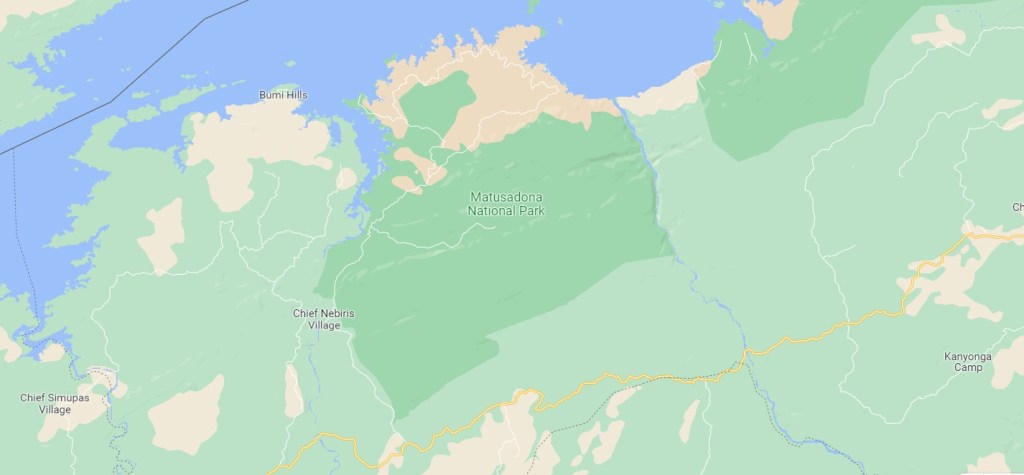
• Matusadona National Park
• Mlilbizi
• Hwange National Park
• Pandamatenga

Travel info:

Most places we stay will be a 2 day stay except Francistown and Chinhoyi. Fuel and supplies are readily available. Total distance of tour approx. 1750km. We will re-enter Botswana at Pandamatenga from Hwange at the end of the tour.

Matopos

Matobo National Park is Zimbabwe’s oldest national park. One  of its sublime features: the Matopo Hills, a series of granite koppies and wooded valleys formed over 2 billion years ago. 

Forty thousand years ago the caves and crevices carved out of these rocks became home to Zimbabwe’s earliest inhabitants, the “San”. Twenty thousand years later “San” artists began painting on the walls of caves and rock shelters, using special pigments and natural minerals that have survived the onslaught of climate and time. We visit some of these on this tour

Another spectacular sight is World’s view , a scenic viewpoint and the burial place of Cecil John Rhodes .The wildlife includes leopards both black rhinos and white rhinos. The park overlooks Maleme Dam  where we will be camping.

Chinhoyi Caves

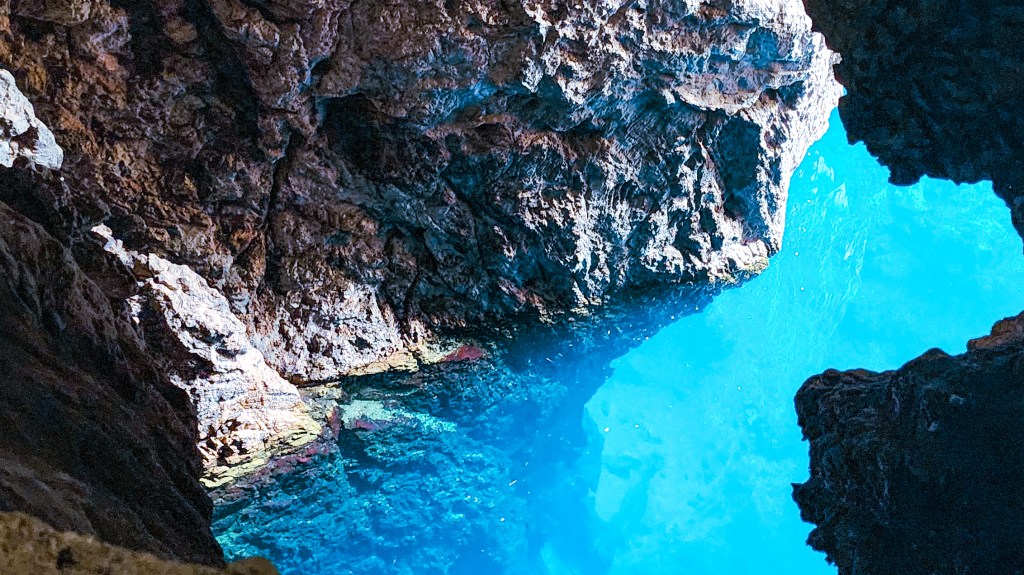
The local name for the cave’s pool, Chirorodziva (“Pool of the Fallen”) comes from an incident that occurred in 1830, where members of the Angonni tribe attacked the local people and threw their victims into the cave to dispose of them.

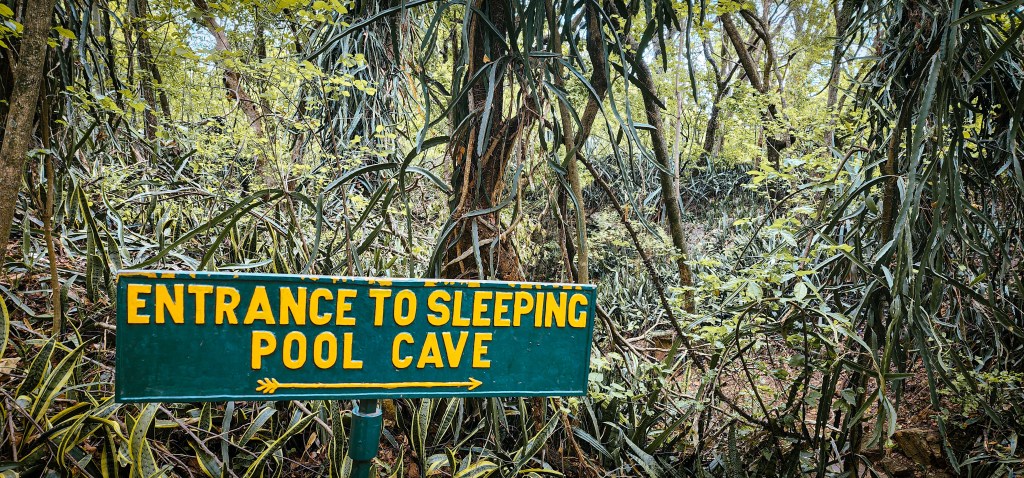
The limestone caves were first described by Frederick Courtney Selous in 1888. These caves are the most extensive cave system in Zimbabwe that the public can access. The cave system is composed of limestone and dolomite. The main cave contains a pool of cobalt blue water, which is popularly called Sleeping Pool or Chirorodziva (“Pool of the Fallen”)

Naletale Ruins

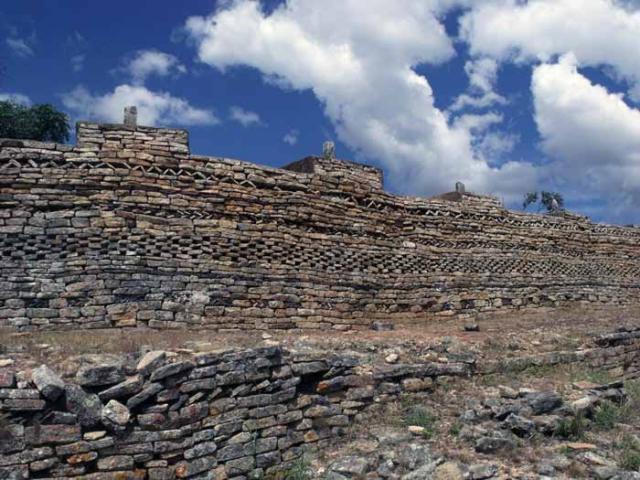
The site is an elliptical complex of dressed granite blocks in the building tradition of Great Zimbabwe. The walls reveal elaborate stonework designs, including check, herringbone, and chevron patterns. In the 1800s, Europeans looking for gold and treasures desecrated the site. Declared a national monument in the 1960s, remedial interventions were undertaken to conserve the ruins.

Matusadona National Park

Matusadona National Park gets its name from the rolling Matusadona hills that form part of its water rich landscape. Flanked by Lake Kariba in the north, and two perennial rivers, the Ume and the Sanyati. All of the Big Five are present, including the endangered black rhino. Elephant and buffalo are abundant on the lake shore and hippos can be seen in small pods in the shallows.

The Sanyati River in the east of the park is well known for its breath-taking gorge, which is one of the most beautiful views in Zimbabwe.

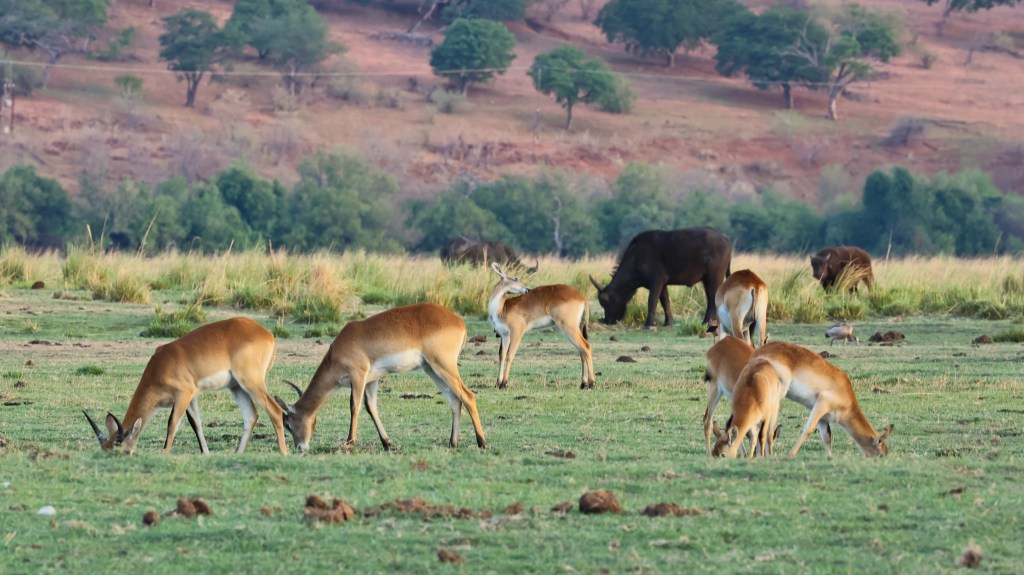
Lake Kariba created the perfect conditions for wildlife to thrive. New lakeshore grazing opportunities attracted entire herds of elephant, buffalo in their thousands, waterbuck, hippo, zebra, and impala while the critically endangered black rhino found sanctuary in Matusadona’s west woodlands.

Matusadona National Park is now home to healthy populations of predators such as crocodile, lion, leopard, spotted genet, side-striped jackal and hyena, and the elusive cheetah has also been spotted. Other common species found in the park include bushbuck, klipspringer, grysbok, roan antelope, kudu, duiker, slender and banded mongoose, warthog, porcupine, bush squirrel, night ape, vervet monkey and chacma baboon.

Hwange National Park

Hwange National Park is the largest in Zimbabwe, covering an impressive 14,650 sq. km. As you’d expect from a park of this size, the breadth of wildlife species is astounding. Over 100 species of mammals reside here, whilst almost 400 species of birds decorate the skies. Perhaps most exciting is the 40,000-strong population of tusker elephants, whose presence is world-renowned and a joy to watch day after day.

Hwange is arguably one of Africa’s very best game-viewing destinations. This massive park and its creatures can be explored on foot, on horseback, or on a game drive. Hwange’s impressive range of wildlife – lion, leopard, rhino, giraffe, buffalo, zebra, gemsbok, hyena, wild dog, and more – is mirrored by the diversity of the park’s environment: the sandy southern part of the park skirts along the Kalahari Desert and is dotted with semi-arid shrubbery, while the northern grasslands are thick with granite outcrops and groves of teak and mopane trees. 

Travel tips

  • Malaria is a risk all year round in Zimbabwe. Consult your doctor about the best prophylactics to take, and be sure to wear mosquito repellent and long-sleeved clothing in the evenings to avoid getting bitten. 
  • Zimbabwe National Parks campsites are unfenced, and as such it is not recommended to camp there with children under 12 years of age. 
  • Be always conscious of wildlife-related safety. Do not approach or attempt to feed any wild animal, be sure to securely pack food away, and carry a torch when walking around the camp at night.  
  • There are no gas stations in the parks. You will need to bring fuel needed for 750km range with you. 
  • Fruit is not allowed into the parks. All trash must be taken out with you when you leave. 

What do you need

  1. A good reliable, serviced 4-wheel drive vehicle.
  2. Fuel range of app. 750km’s including extra fuel containers like long range tanks and jerry cans.
  3. Vehicle registration papers or letter of consent from the financing institution as well as a police clearance for your vehicle and trailer.
  4. Children must have a valid passport and an unabridged birth certificate and letter of consent if not accompanied by both parents.
  5. Guests from non-SADC countries will need a Visa.
  6. A passport that is valid for 3 months after our return to SA, valid driver’s license, and ID.
  7. Camping equipment and cooking/braai accessories.
  8. Fridge/Freezer
  9. Malaria Prophylaxis taken as prescribed by your GP.
  10. Last but not least – A good sense of humor and a positive outlook.

Price includes

· Camping fees
· Guide fees
· Cross border fees excluding 3rd party insurance
· Experienced guide with advanced emergency medical background and medical kit
· 2-way radios
· 2-way Satellite Communications in case of emergency
· Tag along back to SA with guide at your own cost

Not included

· 4×4 vehicle hire
· Any form of insurance including travel insurance
· Fuel
· Food
· Daily activities
· Transfer fees
· Conservation and park entry fees except for parks we camp in
· Medical evacuation
· Anything else not mentioned above in “Price Includes”

← Back

Thank you for your response. ✨

Lake Kariba, Lower Zambezi and Mana Pools

Date 28 July – 7 August 2026
Price R17 900 (R1300 towing fee once off – border and park)

In northern Zimbabwe, the Mana Pools National Park has the mighty Zambezi River separating it from Zambia’s Lower Zambezi National Park. The Lower Zambezi Mana Pools TFCA measures 17,745 km² and lies in the Zambezi Valley, below the Kariba Dam; wildlife used it as a thoroughfare between the escarpment and the Zambezi River since the dawn of time. In Zambia the TFCA is composed of the Lower Zambezi National Park and several game management areas. On the Zimbabwean side it encompasses Mana Pools National Park and the Sapi and Hurungwe communal areas, which incorporate Chewore and Marongora safari areas. In Zimbabwe the TFCA also encompasses river frontage, floodplains, islands, sandbanks and pools.

Lower Zambezi Flood plain

This is one of our flagship tours to this World Heritage Site based on its wildness and beauty, together with a wide range of large mammals, birds and aquatic wildlife. Mana means ‘four’ in the local Shona language and refers to four large pools inland from the Zambezi River. These pools, designated as a Ramsar Wetland of International Importance in 2013, are the remnant ox-bow lakes that the River had carved out thousands of years ago as it changed its course. Hippo, crocodile and a wide variety of aquatic birds are associated with the pools.

This tour starts in Livingstone from where we make our journey north to Lake Kariba. Here we’ll experience some local culture and cuisine. Lake Kariba will be home, from where we’ll head further along the Zambezi en-route to Lower Zambezi. We will spent a few nights on the banks of the mighty Zambezi while we try to catch a big Tiger, doing game drives or just take it slow in camp. On this tour, we will take you to awesome sightseeing and we will go local.

Tiger fishing

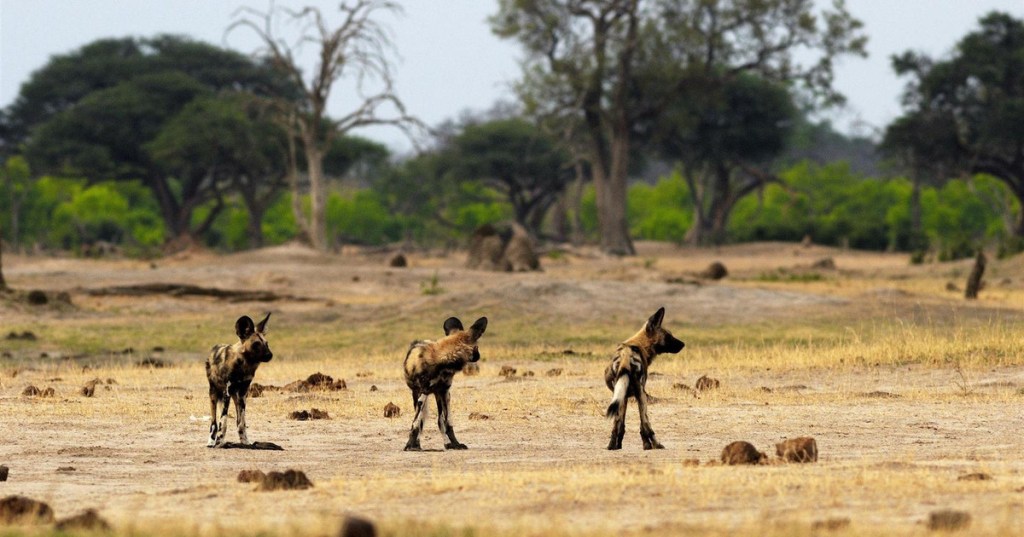
The last 4 nights will be spent in the wonderland called Mana Pools. Here, you can spot large herds of elephant and buffalo, lion, leopard, and reintroduced white rhino. Africa’s third big cat species, the cheetah, is frequently spotted, though many people place Mana Pools on their bucket list because it is one of the best places for seeing the highly endangered African wild dog. The herbivorous species upon which these predators depend also thrive, from large numbers of Burchell’s zebra to waterbuck, kudu, eland, and impala. Meanwhile, the pools provide a sanctuary for some of the continent’s highest concentrations of hippo and Nile crocodiles. 

Complete itinerary will be given with payment of deposit.

Mana Pools Tips

  • Malaria is a risk all year round in Mana Pools National Park. Consult your doctor about the best prophylactics to take, and be sure to wear mosquito repellent and long-sleeved clothing in the evenings to avoid getting bitten. 
  • Zimbabwe National Parks campsites are unfenced, and as such it is not recommended to camp there with children under 12 years of age. 
  • Be conscious of wildlife-related safety at all times. Do not approach or attempt to feed any wild animal, be sure to securely pack food away, and carry a torch when walking around the camp at night.  
  • If you choose to self-drive, note that there are no gas stations in the park. You will need to bring all the fuel needed for your trip with you, with the nearest stations in Karoi, Makuti, or Chirundu (Zambia). 
  • Fruit is not allowed into the park. All trash must be taken out with you when you leave. 
The painted dogs of Mana

What do you need?

  1. A good reliable, serviced 4-wheel drive vehicle.
  2. Fuel range of app. 850km’s including extra fuel containers like long range tanks and jerry cans.
  3. Vehicle registration papers or letter of consent from the financing institution.
  4. Children must have a valid passport and an unabridged birth certificate and letter of consent if not accompanied by both parents.
  5. Guests from non-SADC countries will need a Visa.
  6. A passport that is valid for 3 months after our return to SA, valid driver’s license and ID.
  7. Camping equipment and cooking/braai accessories.
  8. Fridge/Freezer
  9. Malaria Prophylaxis taken as prescribed by your GP. *own discretion
  10. Last but not least – A good sense of humor and a positive outlook.

Price include:

· Camping fees, park fees and conservation fees
· Experienced guide with advanced emergency medical background and medical kit
· 2-way radios
· 2-way Satellite Communications in case of emergency

Not included:

· 4×4 vehicle hire
· Border fees, taxes and insurance
· Fuel
· Food
· Daily activities
· Transfer fees
· Medical evacuation and travel insurance
· Anything else not mentioned above in “Price Include”

← Back

Thank you for your response. ✨

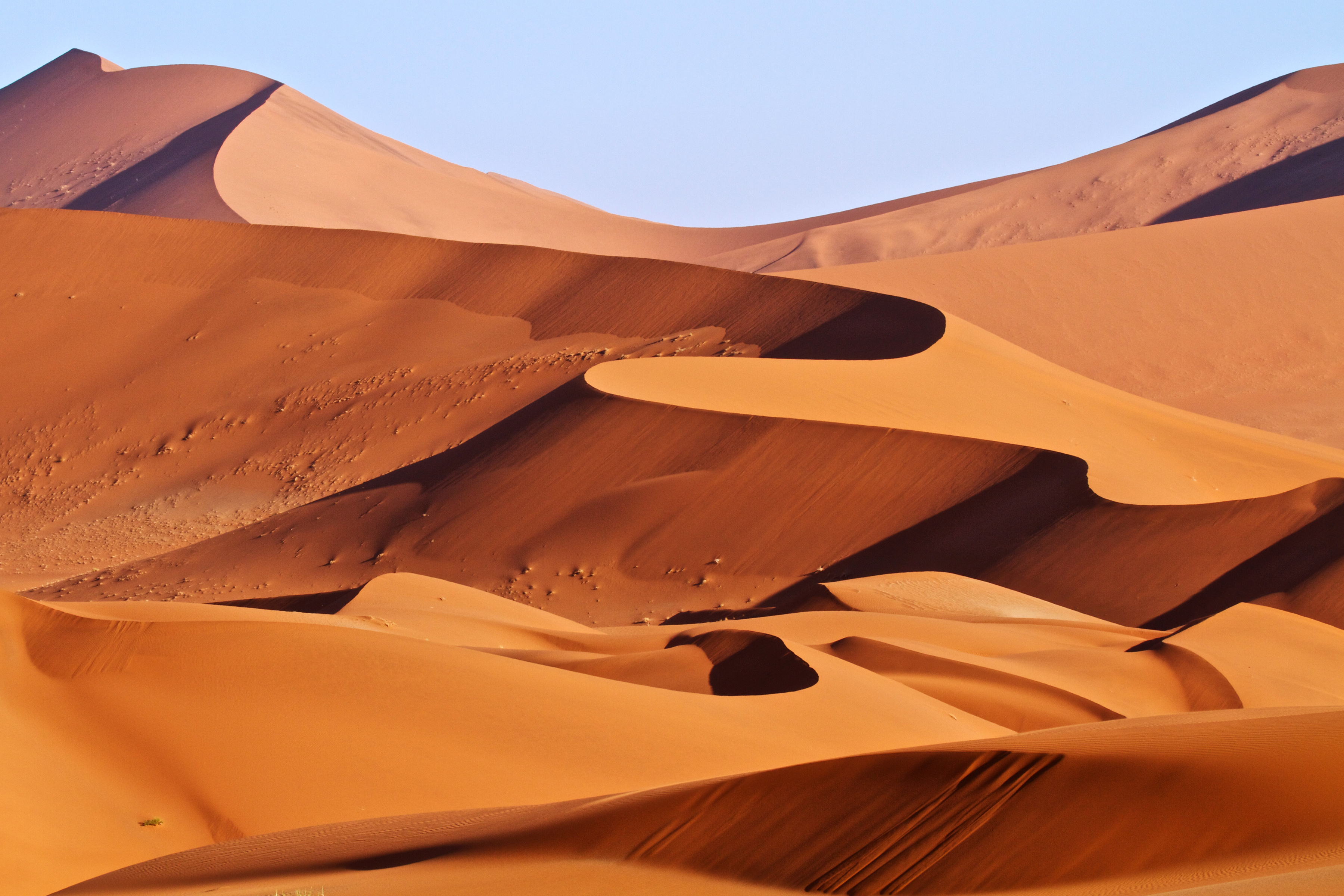
The beauty of nothingness….

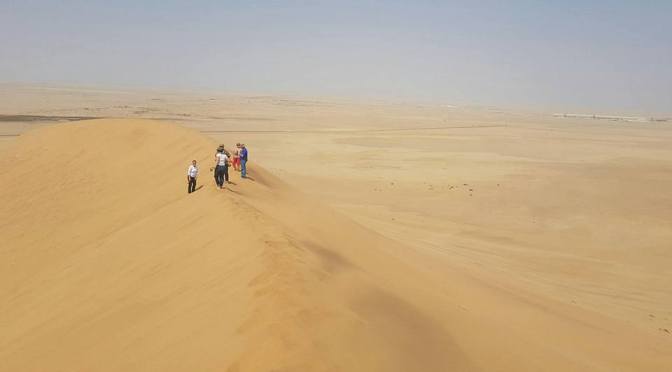
How does one begin to describe the beauty of nothingness…..? Only after sitting on a sand dune and staring into the sea of sand do you appreciate the true beauty of nothingness.

Questions like who am I comes to mind in this bigger picture of nothingness. You come to realise that you are part of the blank canvas upon which the entire universe is painted. You start to realise how small and insignificant you really are. Only then do you realise that life as you know it has no bearing upon who you are but you live because of others. Your existence on earth is to be part of the bigger scheme of things and you have two options. To make life better for those around you and or to do the opposite. Choose wisely because you will be judged for it.

d8386c8f91063e7093e9a32750dff756

By birth we all have the same degree of beauty and purity and then life shapes and changes us into who and what we become. Be careful of the impacts you have on others, especially children Your actions can be the difference between good and evil.
Sometimes we need to travel and get away from life as we know it to get completely lost in the nothingness to find our true selfs.